

The US National Security Agency just dropped a new playbook for securing the internet’s fastest-growing frontier: low Earth orbit satellites. Released on March 24, the Cybersecurity Information Sheet (CSI)—titled “Securing Space”—isn’t just another government PDF. It’s a joint effort with Australia’s cyber and space agencies, plus Canada and New Zealand, laying out exactly how to protect LEO satcom systems from hackers, jammers, and supply chain saboteurs.
Breaking Down the Battlefield
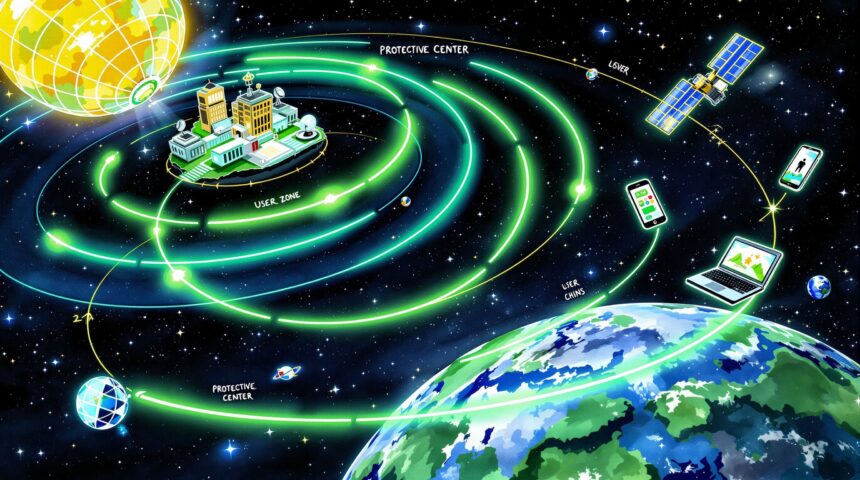
The report splits the threat landscape into four critical zones. The *space segment* covers the satellites themselves—those vulnerable hunks of metal hurtling at 17,000 mph. The *ground segment* includes control centers, gateways, and user terminals. The *user segment* is your devices, apps, and interfaces connecting to the service. And then there’s the *communication links* and the sprawling *supply chain* that builds and maintains it all. Each has its own attack surface, and the NSA isn’t leaving any of them unaddressed.
Mitigations That Go Beyond the Obvious
For the space segment, the agency recommends frequency-hopping signals, redundant communication paths, and anti-jam antennas—hardware-level countermeasures that make it harder to spoof or drown out a satellite. Legacy space equipment gets special attention: retrofit security measures are a must. On the ground, continuous monitoring and anomaly detection are non-negotiable. The user segment needs endpoint security and strict access controls. Think of it as zero trust, but in orbit.
Why This Matters Right Now
LEO constellations aren’t a sci-fi concept anymore. They’re powering everything from Starlink to military comms. The report also offers frameworks for keeping critical networks resilient—because when a satellite link goes down, it’s not just a service outage; it’s a strategic vulnerability. The message is clear: securing space isn’t optional, and it’s not just the satellite operator’s job. It’s a shared responsibility across every link in the chain.
This CSI is a wake-up call, but it’s also a roadmap. Expect to see tighter encryption, smarter ground stations, and more international coordination in the months ahead. The next phase of space security won’t be about launching more satellites—it’ll be about making sure the ones already up there stay safe.
—
*Originally reported by [SatelliteToday Cyber](https://www.satellitetoday.com/cybersecurity/2026/04/12/nsa-reveals-details-of-new-leo-security-report/). Adapted and republished with editorial context for SpaceSecurityNews.*