Space Security News
  • Home
  • News
    A large featureless communications satellite above the night side of Earth with debris fragments streaking past on cyan trajectories

    Musk warns an armed Starlink invites Russian anti-satellite strikes

    October 26, 2026
    A cluster of white parabolic satellite tracking dishes on a coastal hilltop at dusk with a gold radio beam rising toward a small satellite

    Washington gags New Zealand from describing its own tracking hub

    October 26, 2026
    A dense mega-constellation of satellites in orbital shells above a night side Earth with a gold data beam rising from one satellite platform

    SpaceX gets first enhanced view of the military’s orbital catalog

    October 26, 2026
    Twin-engine airliner above a night cloud deck with gold signal rings and a cyan aurora on the horizon

    Safran puts a military-grade navigation core on the A220

    October 24, 2026
  • Features
    Empty tiered conference hall with gold geometric ceiling and tall windows overlooking a deep blue twilight city skyline

    China pushes a space arms race paper as Washington stays quiet

    October 24, 2026
    Ground-based laser observatory dome firing a gold beam at a reconnaissance satellite over a night mountain range

    Germany opens a market hunt for lasers that can blind satellites

    October 24, 2026
    An uncrewed patrol boat with a radar mast navigating coastal water at blue hour

    A robot boat finds its way home with the satellites switched off

    October 23, 2026
    A secure aerospace campus at night beneath a gold network of connected nodes

    A clearance pathway opens for commercial firms chasing classified work

    October 23, 2026
  • Spotlight
  • Events
  • About Us
    • Mission
    • Services
    • Contact Us
Reading: Rocket Lab launches satellite for US Space Force Victus Haze responsive space exercise
Share
Search
  • Trending:
  • Alliances
  • Cislunar
  • Commercial
  • Communications
  • Cyber
  • Debris
  • Defense
  • Deterrence
  • Intelligence
  • Launch
  • Strategy
  • Surveillance
  • Missile
  • Navigation
  • War
Font ResizerAa
Space Security NewsSpace Security News
  • Home
  • News
  • Features
  • Spotlight
  • Events
  • About Us
Search
  • Home
  • News
  • Features
  • Spotlight
  • Events
  • About Us
    • Mission
    • Services
    • Contact Us
Follow US
© 2026 Space Security News. All Rights Reserved.
Satellite Security

Rocket Lab launches satellite for US Space Force Victus Haze responsive space exercise

By
SSN Staff
Last updated: June 22, 2026
4 Min Read
Share

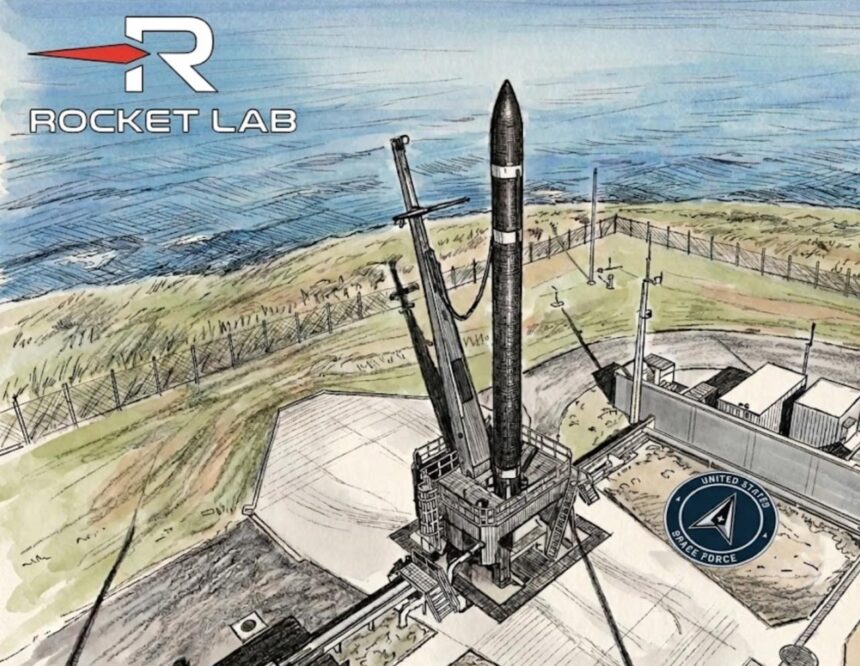
Rocket Lab launched a spacecraft for the U.S. Space Force on June 19 as part of the Victus Haze exercise, a military demonstration designed to validate rapid identification and characterization of orbital threats under operationally realistic conditions.

Contents
  • Rendezvous and Proximity Operations in Focus
  • Building on Rapid Launch Heritage
  • Operational Milestones and Commercial Integration
  • What This Means for Responsive Space

The Electron rocket lifted off from Rocket Lab’s Mahia, New Zealand, facility, carrying the “Victus Haze Puma” satellite into sun-synchronous orbit. The spacecraft is one of two vehicles participating in the mission, funded under a $32 million contract awarded by the Space Force in 2024.

Rendezvous and Proximity Operations in Focus

Following launch, the satellite entered a commissioning phase before initiating rendezvous and proximity operations (RPO) with a second spacecraft operated by Colorado-based startup True Anomaly. Space Systems Command confirmed that on-orbit checkout and vehicle commissioning will precede a series of dynamic engagement scenarios.

“During these operations, the teams operating both the Rocket Lab and the True Anomaly space vehicles will conduct a variety of scenarios, demonstrating space domain awareness and characterization capabilities,” the command stated on June 22. The exercise marks the fourth demonstration under the Space Force’s Tactically Responsive Space (TacRS) program.

Building on Rapid Launch Heritage

Victus Haze expands on the 2023 Victus Nox demonstration, which proved a satellite could launch within 27 hours of receiving an order. While that mission emphasized launch speed, Victus Haze adds the requirement for rapid deployment of spacecraft capable of maneuvering, inspecting, and characterizing objects in orbit.

The broader objective is to transition responsive launch from a proof-of-concept into an operational military capability. Space Force officials have warned that future conflicts may demand satellite replacement, sensor deployment, or orbital threat investigation on timelines of days rather than months.

Operational Milestones and Commercial Integration

Under the Victus Haze architecture, Rocket Lab and True Anomaly provide separate maneuvering spacecraft. Rocket Lab’s vehicle will interact with True Anomaly’s Jackal-004, which launched May 3 aboard a SpaceX Falcon 9 rideshare mission. True Anomaly received a $30 million contract for its role.

Rocket Lab achieved several key benchmarks during the exercise. After receiving the formal notice-to-launch order from the Space Force’s Space Safari program office, the company launched its Electron rocket within 16 hours and 42 minutes—beating the 24-hour requirement. The guidance, navigation, and control team calculated a final trajectory to a previously undisclosed orbit in roughly four hours, updating flight software and coordinating ground stations ahead of liftoff.

Once in orbit, Rocket Lab completed spacecraft commissioning in 37 hours and 36 minutes, enabling orbital maneuvers more than 34 hours ahead of the 72-hour operational deadline. “Victus Haze set out to demonstrate our ability to respond to irresponsible behavior on orbit under operationally realistic conditions, and we are doing just that,” said Col. Bryon McClain, acting Space Force portfolio acquisition executive for Space Combat Power.

True Anomaly confirmed that its Jackal spacecraft is “fully operational and ready to execute rendezvous and proximity operations.”

What This Means for Responsive Space

Victus Haze signals a decisive shift from theoretical rapid-response concepts to proven, commercially integrated capabilities. As the Space Force continues to compress timelines from months to hours, the demonstration validates that maneuvering, characterization, and threat response can be executed on tactically relevant schedules—laying the groundwork for an operational responsive space architecture.

— Originally reported by SpaceNews. Adapted and republished with editorial context for SpaceSecurityNews.


Sign Up For Daily Newsletter

Be keep up! Get the latest breaking news delivered straight to your inbox.
By signing up, you agree to our Terms of Use and acknowledge the data practices in our Privacy Policy. You may unsubscribe at any time.
Share This Article
Facebook Email Copy Link Print

LATEST NEWS

A large featureless communications satellite above the night side of Earth with debris fragments streaking past on cyan trajectories

Musk warns an armed Starlink invites Russian anti-satellite strikes

Emerging Threats & TechNews
October 26, 2026
A cluster of white parabolic satellite tracking dishes on a coastal hilltop at dusk with a gold radio beam rising toward a small satellite

Washington gags New Zealand from describing its own tracking hub

US Space Command has told the New Zealand Defence Force it cannot say what its…

October 26, 2026
A dense mega-constellation of satellites in orbital shells above a night side Earth with a gold data beam rising from one satellite platform

SpaceX gets first enhanced view of the military’s orbital catalog

A Space Force data trade has put the government's most precise collision picture in the…

October 26, 2026
Twin-engine airliner above a night cloud deck with gold signal rings and a cyan aurora on the horizon

Safran puts a military-grade navigation core on the A220

Airbus has picked an inertial system hardened on fighter jets and helicopters to keep its…

October 24, 2026

YOU MAY ALSO LIKE

New AI tool stress-tests satellite networks after the Viasat hack

Cybersecurity firm Atalanta released Argo, an AI-driven scanner now used to prove the resilience of Viasat's hacked satellite network against…

Satellite Security
August 20, 2026

ESA launches CyberCUBE satellite as an orbital cyber defense testbed

The 3U CubeSat launched on a Falcon 9 rideshare will let engineers test cybersecurity defenses under real orbital conditions rather…

Satellite Security
July 17, 2026

A commercial reserve for orbit finally gets its order book

Six space domain awareness firms now hold standing agreements that turn a commercial handshake into a wartime call-up.

Satellite Security
October 22, 2026

Space ISAC adds Resecurity to expand satellite threat intelligence sharing

Cybersecurity firm Resecurity joins the Space Information Sharing and Analysis Center to contribute dark web monitoring and advanced threat intelligence…

Emerging Threats & TechNewsSatellite Security
July 30, 2026

Breaking developments in space and cybersecurity, decoded for the modern defense and technology landscape.

Follow us: 

  • News
  • Features
  • Spotlight
  • Events
  • About Us
  • Mission
  • Services
  • Contact Us
Copyright © 2026 Space Security News. All Rights Reserved.
Privacy Policy | Legal
Welcome Back!

Sign in to your account

Username or Email Address
Password

Lost your password?