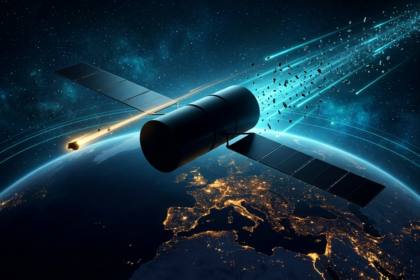


South Korea is formally integrating its commercial space industry with national security strategy, signaling a shift in how emerging space technologies are governed across the public and private sectors.
Hyunjoon Kwon, director general for aerospace policy at the Korea AeroSpace Administration (KASA), stated that space has transcended its traditional scientific role. “Space has moved beyond science to become a domain that can affect both security and industry,” he said. “We need a mutually reinforcing relationship between the market and the public sector.”
Strategic Shift in Space Competition
KASA is now collaborating with the National Intelligence Service and other government bodies to develop satellite cybersecurity protocols and broader aerospace security policies. Kwon emphasized that competition is no longer defined by satellite count alone. “The key question is how reliably a country can use and protect satellite communications and satellite imagery.”
The Russia-Ukraine war has demonstrated how space-based services are directly employed in military operations and critical infrastructure protection. South Korea faces growing threats including GPS jamming and spoofing, satellite communication disruptions, cyberattacks, and risks from orbital collisions or uncontrolled reentry.
Building National Resilience and Awareness
KASA is developing a national space situational awareness system to monitor and predict space-related risks. A cybersecurity response framework is also being prepared to protect space-based services used by the private sector, government, and military.
While South Korea has rapidly advanced its launch vehicle, satellite development, and data application capabilities, gaps remain. The country must strengthen domestic production of critical materials, components, and software. “That is why the growth of private space companies and greater independence in core technologies are becoming even more important,” Kwon noted.
Institutionalizing Public-Private-Defense Cooperation
Since KASA’s establishment, cooperation among private industry, government, and military has entered an institutional phase. Initiatives include a defense science and technology policy council with the Defense Ministry, an aerospace project memorandum with the Defense Acquisition Program Administration, and a satellite cybersecurity consultative body with the National Intelligence Service.
KASA aims to create a structure where private-sector technology directly supports government and national security requirements, while public and defense demand fuels commercial growth. Key areas include satellite communications and data, unmanned aircraft, and space materials. Plans also call for developing core technologies for a space data center under the K-Moonshot initiative, building a national satellite information platform, and advancing AI-powered unmanned and electric vertical takeoff and landing aircraft.
This integration of commercial innovation with defense imperatives positions South Korea to not only secure its space assets but also to shape the emerging architecture of space-based national security.
– Originally reported by UPI / Asia Today. Adapted and republished with editorial context for SpaceSecurityNews.