
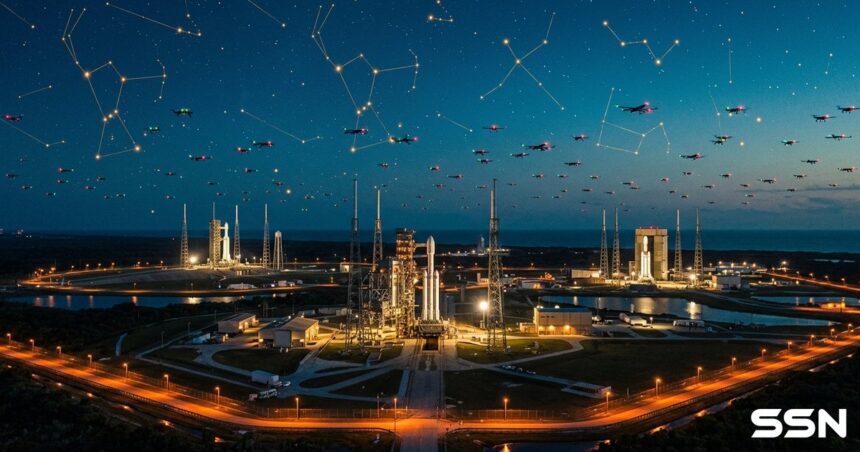
A single errant drone can scrub a US space launch at a cost of millions of dollars, and the threat is growing more sophisticated as drone technology becomes cheaper and more accessible, according to experts examining security vulnerabilities at the nation’s primary launch ranges.
A Chinese national flew a drone over Vandenberg Space Force Base’s restricted airspace for nearly an hour in November 2024, photographing the installation. Two months later, a Chinese-born Canadian citizen made multiple drone flights over Cape Canaveral on three separate days, capturing images of launch complexes, a payload processing facility, and munitions bunkers that federal prosecutors called “vital defense installations.”
The commander of NORAD and US Northern Command told Congress that 350 drone detections were reported across roughly 100 US military installations in one year. At space launch ranges specifically, the problem is acute. The Eastern and Western ranges supported 186 launches in 2025, and the Space Force projects nearly 300 annual launches at the Eastern Range alone by 2030.
Beyond intelligence collection, experts warn that weaponized drones carrying explosives could target fueled rockets or fuel storage facilities. Drones could also carry signals intelligence tools or attempt cyber intrusions against launch range networks. Space launches draw large crowds of tourists, creating additional vectors for adversaries to exploit.
The SpaceNews analysis calls for layered counter-drone defenses, shared situational awareness systems, and updated legal frameworks. The estimated economic impact of a single launch scrub reaches approximately $4 million per day in today’s commercial environment, with cascading effects across the launch manifest.