
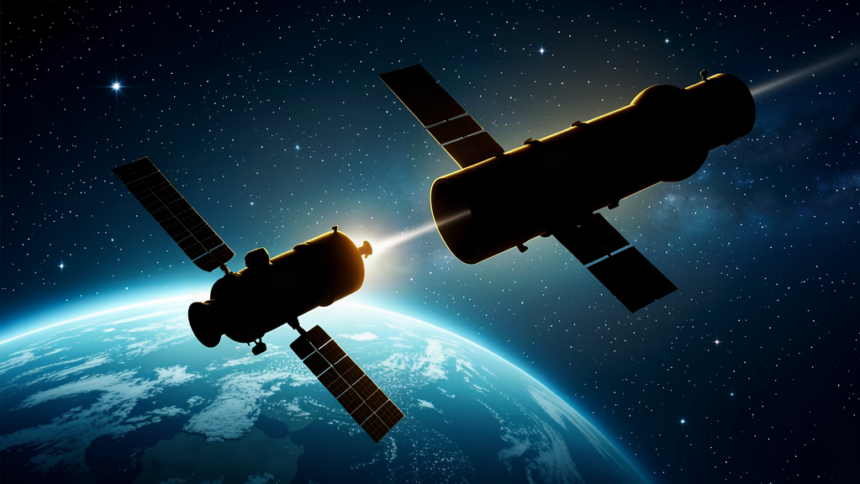
Katalyst Space Technologies will not attempt the planned rescue of NASA’s Swift telescope. The company said Aug. 20 that, in consultation with NASA, its Link spacecraft will skip the grapple-and-boost maneuver that was meant to lift the orbiting observatory.
Link has struggled with attitude control since July. It flew to orbit July 3 on a Pegasus XL rocket and seemed healthy at first, but on July 28 Katalyst disclosed a multi-axis spin tied to attitude-control failures, including two dead reaction wheels. By early August, repeated burns of Link’s electric thrusters had brought the rotation down to 1.47 degrees per second from a peak of 9.
New flight software followed, and on Aug. 11 the company still expected to attempt the capture and boost, with Link due to reach Swift in late August. Neither side has explained what changed beyond citing ongoing attitude control issues.
Rather than a reboost, Link will now carry out rendezvous and proximity operations near Swift. With no boost coming, the telescope’s slow descent continues.
Chief executive Ghonhee Lee framed the effort as a high-risk experiment, saying the company was proud of the milestones it hit before calling the mission off.