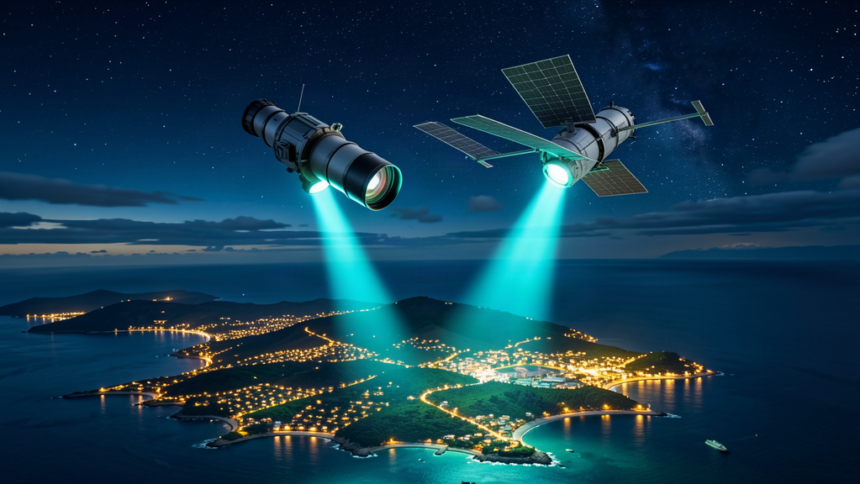
South Korea’s Hanwha is thickening its satellite reconnaissance stack, adding four ultra-sharp optical spacecraft to the radar constellation it is already building.
Satrec Initiative, the group’s satellite manufacturer, will produce the four 10-centimeter-class imaging satellites and fly them alongside a planned 64-satellite synthetic aperture radar fleet designed for 30-minute revisit by 2031. Executive vice president Eugene Kim described the pairing at the World Space Business Week conference in Paris.
The company already operates SpaceEye-T, launched in 2025, which returns 25-centimeter imagery.
Fusing radar and optics for intelligence work
Radar sees through cloud and darkness but resolves shapes; optical resolves fine detail but needs light and clear skies. Stacking both lets an operator cue one sensor with the other, using radar for wide-area coverage and optics to work out what it found.
Kim framed the offer as satellite-as-a-service for defense and intelligence buyers, with artificial-intelligence analysis from Satrec spinoff SI Analytics bundled alongside the imagery. Interpreted product, not raw pixels, is what the company sells.
Resolution is the axis it is chasing. Ten-centimeter imaging is sharper than most commercial systems deliver today, and Airbus is developing its Pleiades Neo Next satellites around the same bet that government and military customers want faster revisit and analyst-ready output.
The constellation Hanwha announced in July pairs all-weather radar with this new optical layer, a combination aimed squarely at customers who need to find something and then identify it before it moves.