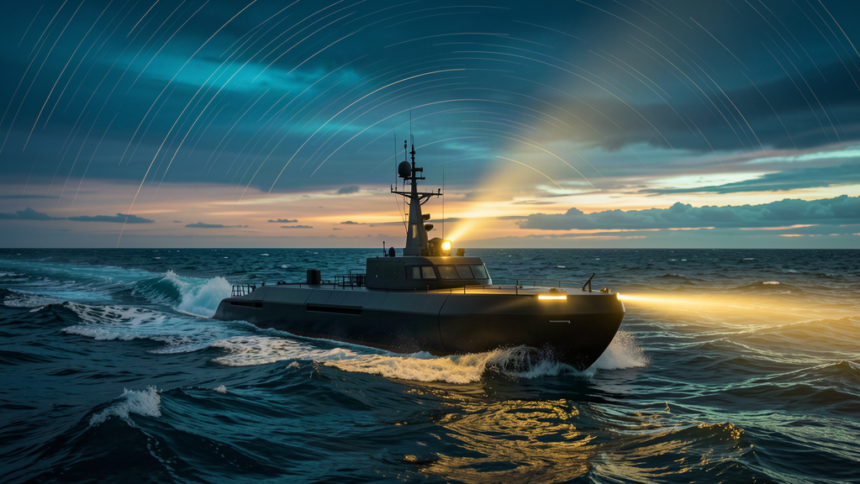
A navigation software firm has shown the UK Ministry of Defence that autonomous vessels can keep their bearings when satellite signals are jammed, spoofed or simply out of reach.
Voyant demonstrated its software aboard a Kraken K3 Scout, an uncrewed surface vessel, in demanding coastal waters. The company said the trial marks a step toward resilient positioning, navigation and timing for autonomous maritime systems that operate in contested environments.
Why autonomy needs a fallback
Uncrewed boats lean on satellite navigation for routing, station-keeping and recovery. Electronic warfare can erase that fix in an instant, leaving a crewed vessel to fall back on human judgment and a robot with nothing to steer by.
Voyant’s approach lets an autonomous platform keep navigating once satellite navigation is lost or deliberately denied, so it can finish its mission and return safely rather than drift or be captured. The company framed the demonstration around mission completion and the recovery of valuable hardware, both live concerns as navies field more unmanned systems.
The trial fits a broader push across NATO and allied forces to harden PNT. Jamming and spoofing have become routine tools in conflicts from Ukraine to the Middle East, and maritime operators sit near the front of that trend, since ships and ports depend on precise timing for navigation, communications and logistics.
Britain has moved on several fronts, treating navigation warfare as a growing risk to both military and commercial traffic. Falling back on inertial navigation, celestial fixes and onboard sensors gives autonomous platforms a path through denied environments.
Voyant said the demonstration supports the MoD’s drive to equip autonomous systems that can operate without a guaranteed satellite link.