

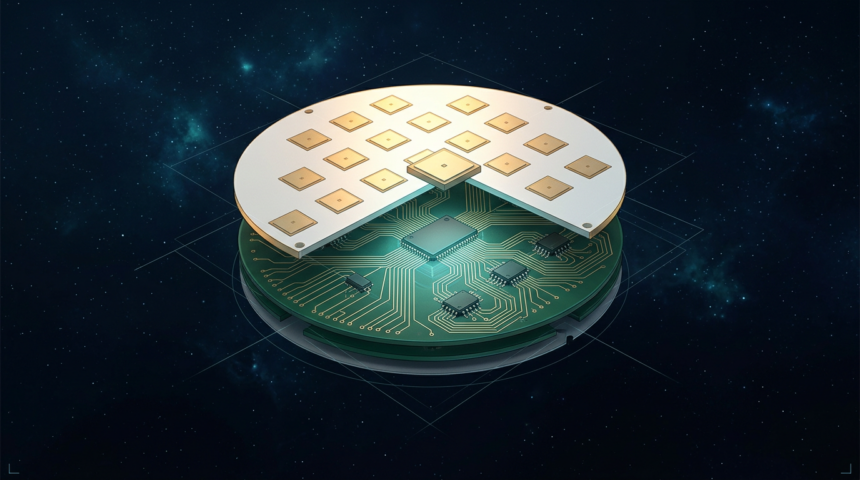
Kyiv’s military intelligence branch has published what sits inside the jamming-resistant navigation hardware Russia bolts onto its smart weapons, and the tally of foreign parts is 37. The War&Sanctions posting also charts the 28 Russian and Chinese companies that build the Kometa modules or feed parts into them.
Suppliers break down by country of origin: 28 American, three apiece from Japan and China, two Swiss, one Taiwanese. Kyiv’s analysts see in those substitutions the fingerprint of sanctions. VNIIR-Progress, the prime contractor, is scouring alternate channels and looking for replacements for Altera and Analog Devices silicon, the two vendors that anchor the design.
Volume has not suffered. Russian buyers placed orders this year for upward of 100,000 Kometa units in various configurations. VNIIR-Progress leans on plants inside its ABS Electro parent plus hired contractors; a related firm, VNIIR JSC, buys chips through Chinese distributors and Russian go-betweens.
The hardware’s job is to hold a satellite fix while missiles, drones and glide bombs fly through heavy electronic attack. Controlled-reception-pattern antennas, paired with processing electronics, sift the navigation signal out of the clutter.
On Kyiv’s list sit Cyclone programmable logic parts carrying the Altera name, alongside converters and radio-frequency devices from Analog Devices and its Linear Technology line. Element counts are climbing too: 16-element arrays are now commonplace in the field, 20-element runs are being set up, and Chinese factories along with Russia’s Alabuga zone already turn out 32-element antennas.
The takeaway for space and defense watchers concerns leakage. Each imported chip is a point where export controls could still bite, provided enforcers can trace where it ended up.



