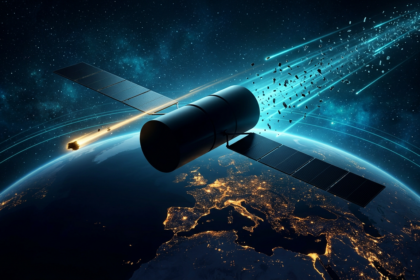
Britain’s Royal Air Force formed its first space squadron on September 23, a unit with a mandate to act against hostile activity in orbit rather than only watch it. No. III Space Effects Squadron was announced by Chief of the Air Staff Air Chief Marshal Sir Harv Smith at the first UK Space Power Conference.
The Ministry of Defence sums up the mission as disrupt, degrade and deny. Electronic warfare provides most of that reach today, and the RAF says the unit will broaden as new tools arrive. It is built for offense and defense, hitting adversary systems while shielding friendly ones.
The RAF already ran two units in the domain. No. I takes space operations and No. II takes space warning, a pair responsible for finding and flagging threats. No. III is the first British formation charged with doing something about them.
London is not starting from a standing start. The BBC reported that British forces are already jamming other nations’ satellites in self-defense, and UK Space Command has said Russia interferes with British military satellites on a weekly basis.
Defence Secretary Wes Streeting used the same conference to frame orbit as the era’s defining contest, arguing that control of the waves shaped 19th century deterrence and control of the air shaped the 20th.
A strategy finds its sharp end
The squadron is the operational edge of the UK Space Strategy published on September 8, which committed £7.8B through 2030 and folded civil, defense and national security space work into one plan.
The unit also answers a call Washington has repeated to allies. The US Space Force fielded its own dual-role electronic warfare squadron in August, and Britain’s new formation gives NATO a second operator able to reach hostile spacecraft with non-kinetic effects.