

Space Security News
  • Home
  • News

    Ukrainian cyber operation exposes Russia’s missile and space design institute

    September 10, 2026

    TrustPoint books 40 spacecraft to scale its GPS-free navigation net

    September 10, 2026

    Simulators let guardians rehearse satellite combat without risking the fleet

    September 10, 2026

    Pentagon nearly doubles national security launch buys as bill hits $76B

    September 9, 2026
  • Features

    First live-fly space exercise puts real satellites through orbital agility drills

    September 9, 2026

    US war game ends with two rival missile shields and no deal

    September 9, 2026

    Britain folds space defense and civil work into one £7.8B plan

    September 9, 2026

    Bundeswehr scouts jammers and spoofers to counter Russian satellites

    September 7, 2026
  • Spotlight
  • Events
  • About Us
    • Mission
    • Services
    • Contact Us
Reading: Cybersecurity in Space is Hard; In Cislunar Space, It is Really Hard
Share
Search
  • Trending:
  • Alliances
  • Cislunar
  • Commercial
  • Communications
  • Cyber
  • Debris
  • Defense
  • Deterrence
  • Intelligence
  • Launch
  • Strategy
  • Surveillance
  • Missile
  • Navigation
  • War
Font ResizerAa
Space Security NewsSpace Security News
  • Home
  • News
  • Features
  • Spotlight
  • Events
  • About Us
Search
  • Home
  • News
  • Features
  • Spotlight
  • Events
  • About Us
    • Mission
    • Services
    • Contact Us
Follow US
© 2026 Space Security News. All Rights Reserved.
Emerging Threats & Tech

Cybersecurity in Space is Hard; In Cislunar Space, It is Really Hard

By
SSN Staff
Last updated: July 1, 2026
5 Min Read
Share
Cybersecurity in Space is Hard; In Cislunar Space, It is Really Hard

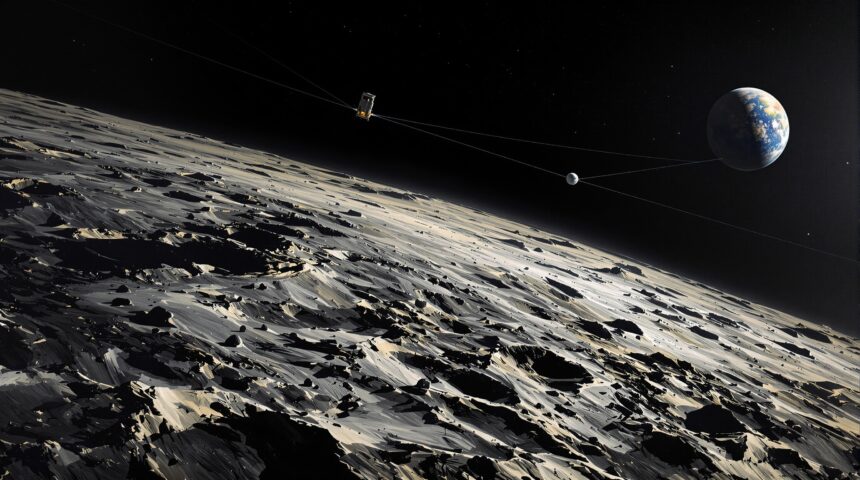
Securing cislunar space—the vast region between Earth and the Moon—presents cybersecurity challenges that far exceed those in low Earth orbit, demanding autonomous defenses, hardened infrastructure, and universal standards from the outset.

Contents
  • The Limits of Terrestrial Cyber Defenses in Deep Space
  • Attack Surfaces Multiply in a Software-Defined Environment
  • Critical Infrastructure, Unforgiving Consequences
  • Latency as a Shield, Power as the Ultimate Challenge

The Limits of Terrestrial Cyber Defenses in Deep Space

Traditional cybersecurity strategies, such as centrally managed anomaly detection, routine patching, and hardware replacement, are often impractical or cost-prohibitive in orbit. In cislunar space, these limitations intensify dramatically. Unlike LEO constellations, which refresh hardware every few years, cislunar infrastructure must remain functional for at least 10 to 15 years.

Radio wave latency compounds the problem. A round trip to the Moon takes nearly three seconds; to Mars, between six and 44 minutes. “When we send a command to drive the rover on Mars, we send high level software commands, and they go to a computer on board the rover, and that computer then interprets them,” explains Sam Visner, chairman of the Space Information Sharing and Analysis Center. Autonomy is not optional—it is indispensable.

Attack Surfaces Multiply in a Software-Defined Environment

Cislunar operations are inherently IT-intensive and software-defined. Sensors, telemetry, and commands all flow through software layers. “Every aspect of operations in that environment is going to be IT intensive,” Visner notes. But software-defined everything means every component becomes a potential attack surface.

This complexity is compounded by the sprawling stakeholder ecosystem of NASA’s Artemis program, which involves more than 60 nations and numerous private partners. “Cyber on Earth is already the Wild West. It is hard to hold bad actors accountable, every country has its own set of standards and regulations,” says Matthew Lamanna, a former U.S. Air Force cyber analyst. He argues that universal cybersecurity standards must be established upfront. “The rules need to be set up front, so everyone is meeting the same standards from the beginning, because you cannot do what we tend to do, and try to bolt it on after the fact. That is a recipe for failure.”

Critical Infrastructure, Unforgiving Consequences

In space, everything is critical infrastructure, and failure carries existential stakes. “Down here, if there is a cyberattack and you lose power or water for a day or so, it is bad, but it is survivable. On the Moon: How long can you go without air?” Lamanna warns. A 2024 Government Accountability Office audit found that a cyber attack on a NASA spacecraft could result in loss of mission data, reduced system lifespan, or loss of vehicle control. Auditors noted that while NASA has issued cybersecurity guidance, it has not made it mandatory for programs or embedded it in acquisition contracts.

Latency as a Shield, Power as the Ultimate Challenge

Paradoxically, cislunar distances may offer a defensive advantage. Christopher Stott, CEO of Lonestar Data Holdings, argues that long transmission delays render brute force and password spray attacks infeasible because TCP/IP connections break down. “High latency equals high security,” Stott says. NASA has developed Delay/Disruption Tolerant Networking to address these communications constraints.

Yet the most pressing challenge for a sustained lunar presence remains power. NASA and the Department of Energy are planning a lunar nuclear reactor by 2030. Volta Space Technologies offers an alternative: satellites in lunar orbit that collect solar energy and beam it to surface receivers called LightPorts. The first LightPort is slated for the Moon’s far side this year, aboard Firefly Aerospace’s Blue Ghost Mission 2 lander.

As humanity pushes deeper into cislunar space, the cybersecurity architecture must be as resilient as the life-support systems it protects—built from the start, not bolted on after.

– Originally reported by Satellite Today / Via Satellite. Adapted and republished with editorial context for SpaceSecurityNews.
Sign Up For Daily Newsletter

Be keep up! Get the latest breaking news delivered straight to your inbox.
By signing up, you agree to our Terms of Use and acknowledge the data practices in our Privacy Policy. You may unsubscribe at any time.
Share This Article
Facebook Email Copy Link Print

LATEST NEWS

Ukrainian cyber operation exposes Russia’s missile and space design institute

Emerging Threats & Tech
September 10, 2026

TrustPoint books 40 spacecraft to scale its GPS-free navigation net

TrustPoint has ordered 40 spacecraft from EnduroSat's U.S. arm to scale up a C-band navigation…

September 10, 2026

Simulators let guardians rehearse satellite combat without risking the fleet

The Space Force is buying portable simulators so satellite crews can rehearse jamming and interference…

September 10, 2026

Pentagon nearly doubles national security launch buys as bill hits $76B

A fresh Pentagon cost report shows the US military planning 337 rocket launches versus 151…

September 9, 2026

YOU MAY ALSO LIKE

ZhuQue-3 makes China’s first on-land booster recovery

LandSpace soft-landed its ZhuQue-3 first stage on land, giving China a reusable booster like the Falcon 9 and a faster…

Emerging Threats & Tech
August 20, 2026

CISA’s risk-based overhaul: why satellite operators can finally stop patching everything

CISA’s new vulnerability directive moves from blanket patching to risk-based triage — a shift with major implications for satellite operators…

Emerging Threats & TechGround Segment & OperationsNews
June 9, 2026

Fourteen guardians graduate inaugural Regional Space Advisor course

The inaugural Regional Space Advisor course graduated 14 Guardians trained to integrate space capabilities with combatant command operations worldwide.

Emerging Threats & TechNews
July 18, 2026

Space Force delivers over $500 million in rapid technology awards

The Space Force awarded over $500 million in rapid prototyping contracts to commercial companies developing next-generation space technologies.

Emerging Threats & TechNewsSatellite Security
July 18, 2026

Breaking developments in space and cybersecurity, decoded for the modern defense and technology landscape.

Follow us: 

  • News
  • Features
  • Spotlight
  • Events
  • About Us
  • Mission
  • Services
  • Contact Us
Copyright © 2026 Space Security News. All Rights Reserved.
Privacy Policy | Legal
Welcome Back!

Sign in to your account

Username or Email Address
Password

Lost your password?