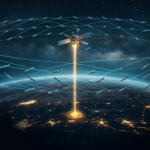


SpaceComputer will launch a demonstration mission of its Space Fabric secure compute architecture aboard a Spacemanic satellite this October, aiming to validate a hardware-enforced security model for shared orbital payloads. The mission directly addresses the escalating threat of on-orbit cyberattacks and the growing complexity of rideshare satellite operations, where multiple tenants share a common bus.
Hardware-Enforced Isolation for Multi-Tenant Satellites
Space Fabric creates a physical barrier between distinct payloads operating on the same satellite, preventing unauthorized access or tampering within shared compute modules. The architecture generates cryptographic keys onboard, ensuring that sensitive data never touches terrestrial systems or adjacent payloads. This approach replaces the traditional “trust me, bro” model with verifiable, application-agnostic security that covers AI inference, image processing, and communications workloads.
The open-source framework—comparable to Red Hat Enterprise Linux in its modularity—sits atop a satellite’s existing compute module without impacting the onboard computer. By combining hardware and software cryptographic methods, Space Fabric provides irrefutable proof that specific compute workloads were executed in orbit and remain unaltered throughout the process.
Beyond Communications: The Expanding Attack Surface
Industry attention has long focused on securing satellite communications links, but SpaceComputer officials warn that the threat landscape has shifted inward. As satellites transition from siloed, bespoke systems to shared, multi-vendor architectures, risks now emerge within the supply chain and onboard the satellite itself.
“Rideshare options, where you have maybe 20 to 30 different payloads sitting on the same bus…the attacker can be sitting in one of the other payloads on the same bus,” said Filip Rezabek, CTO and cofounder of SpaceComputer. The company’s architecture is designed to accommodate precisely these scenarios, offering cryptographic proofs that eliminate any need for blind trust between co-located payloads.
What This Means for the Industry
The Space Fabric demo mission represents a critical step toward establishing zero-trust security as a baseline requirement for next-generation satellite architectures. As orbital edge computing, AI inference, and multi-tenant rideshare missions become standard, the ability to verify—not just trust—the integrity of onboard operations will be essential for both commercial operators and national security stakeholders. If validated, SpaceComputer’s approach could set a new industry benchmark for how the space sector addresses the growing convergence of cyber and physical threats in orbit.
— Originally reported by Payload. Adapted and republished with editorial context for SpaceSecurityNews.