
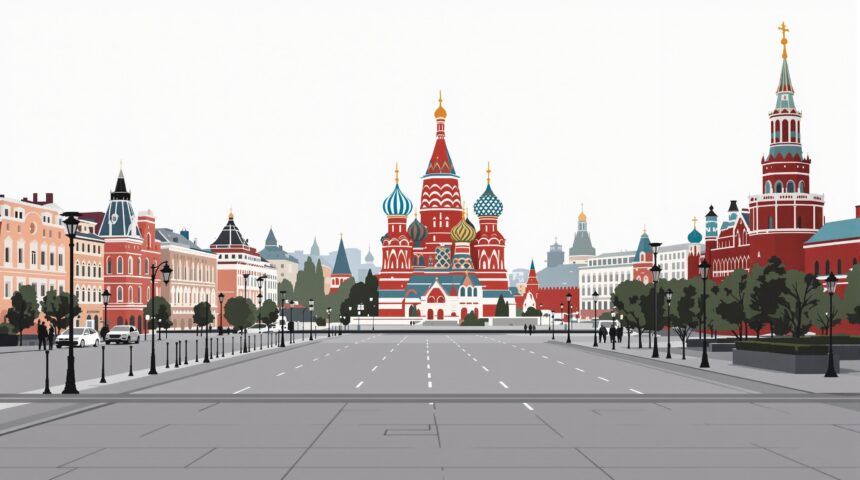
Russia’s annual Victory Day parade in Red Square was supposed to be a thunderous display of military might. Instead, it was a ghost of its former self—no tanks, no new missile systems, barely a flyover. Analysts say the scaled-back spectacle wasn’t a sign of strength, but a glaring admission of fear.
The Parade That Wasn’t
For decades, May 9 was Moscow’s chance to flex. This year, the Kremlin cited “security reasons” for keeping the heavy hardware in the garage. President Putin claimed the military needed to focus on “the final defeat” of Ukraine, but defense experts see a different calculus: Ukraine’s growing deep-strike drone capability has made Red Square a potential target.
“It demonstrated nothing but fear and weakness,” wrote Alexander Baunov of the Carnegie Russia Eurasia Center, noting the internet was jammed to prevent Ukrainian drones from navigating to the site. Only a single new armored vehicle rolled out last year; this time, screens projected images of tanks instead of the real thing.
Ukraine’s Unshackled Drones
The real story here is Ukraine’s evolving arsenal. Since the US-Israeli strike on Iran’s former Supreme Leader in February, Kyiv has felt less pressure to hold back. “The shackles are off,” said Timothy Ash of Chatham House. Ukraine now deploys long-range one-way attack drones that can hit high-value targets deep inside Russia. Just days before the parade, Moscow claimed to have intercepted dozens of drones heading toward the capital.
This isn’t just about hardware. It’s about Putin’s personal calculus. Analysts suggest the Russian leader—known for his bunker-like security—now worries that even the US can’t guarantee his safety. The parade’s subdued tone, they argue, is a direct response to Ukraine’s newfound permission to strike where it hurts.
What the Empty Square Really Means
The missing tanks and troops aren’t just a logistical choice—they’re a propaganda failure. Victory Day is meant to cement Russia’s image as the heir to Soviet wartime glory. Without the hardware, that image rings hollow. “It weakens the propaganda value for domestic audiences,” said Natia Seskuria of the Royal United Services Institute.
Meanwhile, discontent at home is rising. The economy is spiraling, casualties are mounting, and Putin’s approval ratings are slipping. Analysts compare the current pressure to the brief Wagner mutiny in 2023. For now, Moscow is avoiding another mass mobilization, fearing the backlash it would trigger.
This year’s parade may be remembered not as a show of power, but as a turning point. If Ukraine can keep the pressure on, next May 9 might not feature a parade at all.
—
*Originally reported by [Breaking Def.](https://breakingdefense.com/2026/05/in-russian-military-parade-meant-to-project-power-analysts-see-real-vulnerability/). Adapted and republished with editorial context for SpaceSecurityNews.*