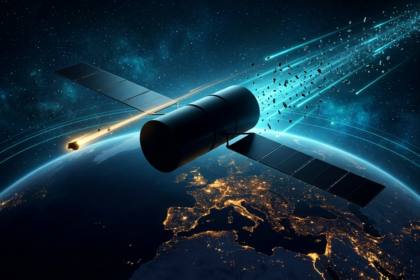


The Space Force cannot pull its communications satellites off station for a live-fire rehearsal, so it is buying machines that fake the fight instead.
Two recent contracts to Auria Space, a Colorado Springs company, show the push. One is a $10.6M package for satellite communications testing and training. The other expands the use of space warfare simulators across the training pipeline.
The larger award covers MSFITS, short for the Multirole Satellite Frequency In-Field Test Suite. It is a portable mix of hardware and software that reproduces the radio-frequency conditions operators would meet in the field, and it works without touching an operational spacecraft. Space Systems Command disclosed the two-year deal in June as a $10.6M award to Boecore, one of the firms folded into Auria.
Chief executive Damian DiPippa described the gap plainly. Air crews can fly against aggressor squadrons at Nellis, but satellites cannot be unplugged from their missions for that sort of drill. MSFITS hooks into modems and antennas and lets crews practice telemetry, tracking and commanding, scheduling and other satellite communications work inside simulated jamming and interference.
The effort sits under Space Systems Command’s Operational Test and Training Infrastructure office, which also runs the National Space Test and Training Complex. That project links physical ranges with digital models and synthetic environments where guardians train against simulated threats, part of a wider shift toward preparing for a conflict in which spacecraft and their links are attacked.
Auria is one of a growing group of suppliers selling simulation and test gear as the service builds out ranges, simulators and digital rehearsal space.