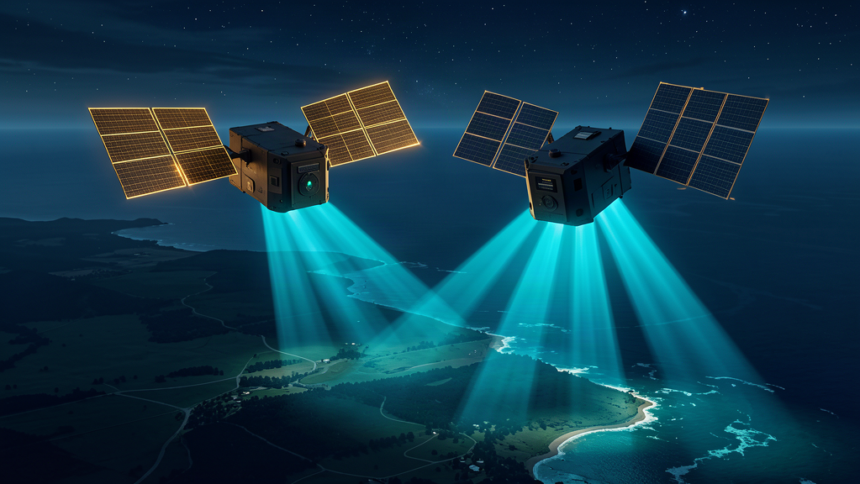
The Space Force is days away from putting its first aircraft-tracking satellites into orbit, and it has now named the fleet that will hunt moving targets on the ground.
Lt. Gen. Gregory Gagnon, who heads Combat Forces Command, told reporters on Sept 16 that the space-based ground moving target indicator effort is called Resilient Radar System-Ground, with Northrop Grumman building the spacecraft. He said that launch is expected within one to two years.
A month of firsts for space sensing
The air-moving target indicator constellation is closer still. Air Force Secretary Troy Meink said on Sept 14 that the first AMTI prototypes would launch before October, and the service has not disclosed how many satellites the mission carries. The only Space Force launch on the public September schedule was USSF-259, a classified payload that left Vandenberg Space Force Base on a Falcon 9.
SpaceX holds the $4.16B contract to field an operational AMTI constellation by 2028, and 12 vendors are competing for related work. Col. Ryan Frazier, the portfolio acquisition executive for space-based sensing and targeting, said demonstrators already on orbit have retired technical risk on the big award.
New units, new doctrine
The opening satellites will not deliver global coverage. Frazier said they will generate the data needed to refine processing algorithms, battle management and the chain that turns a track into a strike decision.
Space Delta 7 activated the 77th Surveillance Squadron on July 31 to fuse satellite tracks with other intelligence and hand targeting options to commanders. US Space Command is drafting a concept of operations and a plan to take the satellites over once they are certified, its commander, Gen. Stephen Whiting, said. Chief of Space Operations Gen. Douglas Schiess described space-based AMTI and the delayed E-7 Wedgetail aircraft as complementary sensors.