
Space Security News
  • Home
  • News

    Ukrainian cyber operation exposes Russia’s missile and space design institute

    September 10, 2026

    TrustPoint books 40 spacecraft to scale its GPS-free navigation net

    September 10, 2026

    Simulators let guardians rehearse satellite combat without risking the fleet

    September 10, 2026

    Pentagon nearly doubles national security launch buys as bill hits $76B

    September 9, 2026
  • Features

    First live-fly space exercise puts real satellites through orbital agility drills

    September 9, 2026

    US war game ends with two rival missile shields and no deal

    September 9, 2026

    Britain folds space defense and civil work into one £7.8B plan

    September 9, 2026

    Bundeswehr scouts jammers and spoofers to counter Russian satellites

    September 7, 2026
  • Spotlight
  • Events
  • About Us
    • Mission
    • Services
    • Contact Us
Reading: Cybersecurity in space is hard; in cislunar space, it’s really hard
Share
Search
  • Trending:
  • Alliances
  • Cislunar
  • Commercial
  • Communications
  • Cyber
  • Debris
  • Defense
  • Deterrence
  • Intelligence
  • Launch
  • Strategy
  • Surveillance
  • Missile
  • Navigation
  • War
Font ResizerAa
Space Security NewsSpace Security News
  • Home
  • News
  • Features
  • Spotlight
  • Events
  • About Us
Search
  • Home
  • News
  • Features
  • Spotlight
  • Events
  • About Us
    • Mission
    • Services
    • Contact Us
Follow US
© 2026 Space Security News. All Rights Reserved.
FeaturesSatellite Security

Cybersecurity in space is hard; in cislunar space, it’s really hard

By
SSN Staff
Last updated: May 12, 2026
4 Min Read
Share
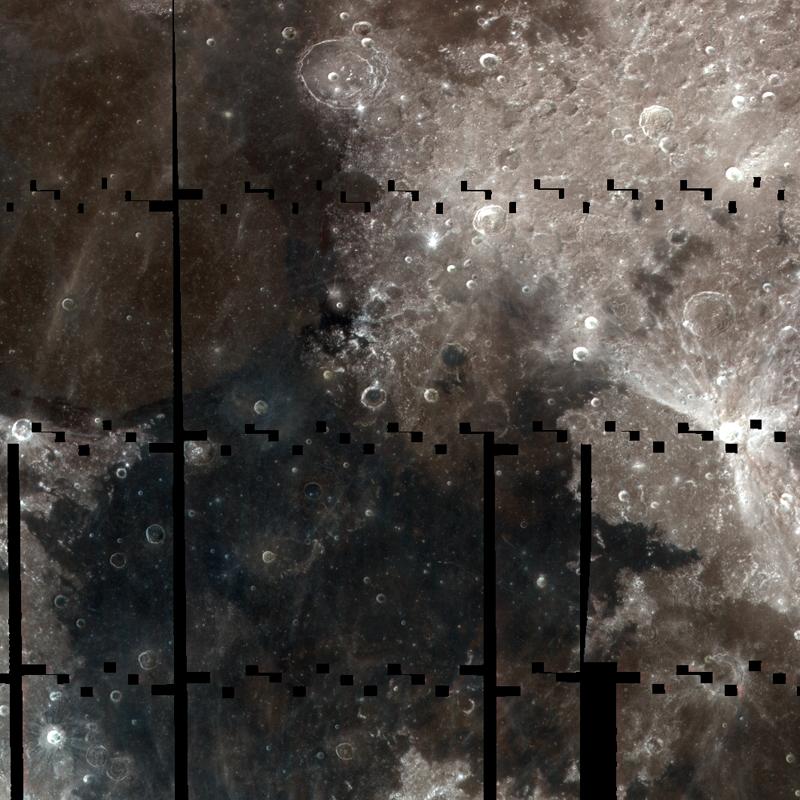
The Moon - NASA photo representing cislunar space cybersecurity challenges
Color of the Moon

The Moon is three seconds away. That’s the round-trip lag for a radio signal between Earth and lunar orbit. For a hacker, that delay is a nightmare. For a satellite defender, it’s an even bigger one.

Contents
  • Latency Is the New Threat Vector
  • Critical Infrastructure Gets a Lot More Critical
  • What This Means for the Future of Lunar Operations

Cybersecurity on Earth is hard enough. In space, it’s a beast. But in cislunar space—the vast region between our planet and the Moon—the playbook breaks entirely. The workarounds that keep Low-Earth Orbit constellations safe simply don’t scale to a quarter-million miles.

Latency Is the New Threat Vector

Radio waves take nearly three seconds to travel to the Moon and back. To Mars, it’s between six and 44 minutes. That’s not just an inconvenience—it rewrites the rules of cyber defense. You can’t sit at a console and steer a rover in real time. You send high-level software commands, and the onboard computer figures out the rest.

“We don’t send a radio signal which operates a hydraulics system,” explains Sam Visner, chair of the Space-ISAC. “We send high level software commands.” That makes cislunar space intensely IT-dependent. Sensors, telemetry, commands—everything flows through software. And software-defined systems are attack surfaces waiting to happen.

The good news? Latency can be a shield. Christopher Stott, CEO of Lonestar Data Holdings, points out that brute-force attacks and password spraying rely on fast, repeated logins. At lunar distances, TCP/IP connections time out. “High latency equals high security,” he says. NASA has already developed Delay/Disruption Tolerant Networking (DTN) to keep interplanetary networks alive through those gaps.

Critical Infrastructure Gets a Lot More Critical

On the Moon, there’s no backup grocery store. No backup atmosphere. Matthew Lamanna, a former Air Force cyber analyst, puts it bluntly: “Down here, if you lose power for a day, it’s survivable. On the Moon: How long can you go without air?”

Every system becomes life support. That’s not new for NASA—the agency has decades of experience building redundant, resilient hardware. But the attack surface is sprawling. More than 60 countries have signed the Artemis Accords. Private companies are piling in. Each partner brings its own security standards, its own vulnerabilities, its own insider threats.

Lamanna argues for universal cybersecurity rules baked in from day one. “You can’t do what we tend to do and try to bolt it on after the fact,” he says. “That is a recipe for failure.” A 2024 Government Accountability Office audit found NASA had issued cybersecurity guidance but hadn’t made it mandatory for programs or contracts. Some Artemis elements did include testing requirements, but the approach remains patchwork.

What This Means for the Future of Lunar Operations

Cislunar infrastructure will need to function for 10 to 15 years without hardware refresh cycles. That’s a decade-plus of software aging, unpatched vulnerabilities, and evolving threats—all at a distance where autonomy isn’t optional, it’s mandatory.

The race to the Moon is also a race to secure it. The three-second lag isn’t just a technical constraint. It’s a design constraint for an entire new class of cyber defense. And if we get it wrong, the consequences won’t be a data breach. They’ll be a life-or-death system failure, silently playing out a quarter-million miles away.

—

*Originally reported by [SatelliteToday Cyber](https://www.satellitetoday.com/cybersecurity/2026/04/07/cybersecurity-in-space-is-hard-in-cislunar-space-its-really-hard/). Adapted and republished with editorial context for SpaceSecurityNews.*

Sign Up For Daily Newsletter

Be keep up! Get the latest breaking news delivered straight to your inbox.
By signing up, you agree to our Terms of Use and acknowledge the data practices in our Privacy Policy. You may unsubscribe at any time.
Share This Article
Facebook Email Copy Link Print

LATEST NEWS

Ukrainian cyber operation exposes Russia’s missile and space design institute

Emerging Threats & Tech
September 10, 2026

TrustPoint books 40 spacecraft to scale its GPS-free navigation net

TrustPoint has ordered 40 spacecraft from EnduroSat's U.S. arm to scale up a C-band navigation…

September 10, 2026

Simulators let guardians rehearse satellite combat without risking the fleet

The Space Force is buying portable simulators so satellite crews can rehearse jamming and interference…

September 10, 2026

Pentagon nearly doubles national security launch buys as bill hits $76B

A fresh Pentagon cost report shows the US military planning 337 rocket launches versus 151…

September 9, 2026

YOU MAY ALSO LIKE

Airbus acquires Quarkslab — a sovereign cyber play takes shape in Europe

Airbus has acquired French cybersecurity firm Quarkslab in a move that consolidates European sovereign cyber capabilities across aerospace and defense.

FeaturesSatellite Security
May 16, 2026

Space42 and Leonardo DRS team on secure links for UAE missions

Leonardo DRS and the UAE's Space42 will combine battlefield mission systems with secure satellite connectivity under a new pact.

Satellite Security
August 6, 2026

OrbitWhisperer AI Satellite Cybersecurity Framework Presented to NATO

A new AI-driven satellite resilience framework developed by Embry-Riddle researchers is drawing international attention after being presented to NATO. OrbitWhisperer…

Emerging Threats & TechSatellite Security
June 25, 2026

Digantara turns on an Indian-built AI network to watch orbit

Digantara's five-node MOSAIC network gives India real-time, homegrown orbital tracking.

Satellite Security
August 19, 2026

Breaking developments in space and cybersecurity, decoded for the modern defense and technology landscape.

Follow us: 

  • News
  • Features
  • Spotlight
  • Events
  • About Us
  • Mission
  • Services
  • Contact Us
Copyright © 2026 Space Security News. All Rights Reserved.
Privacy Policy | Legal
Welcome Back!

Sign in to your account

Username or Email Address
Password

Lost your password?