
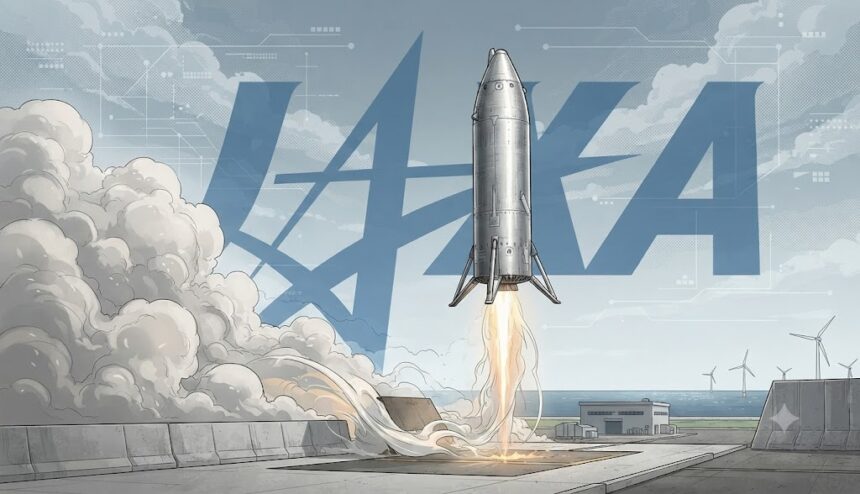
Japan’s space agency JAXA successfully launched and landed its experimental reusable rocket RV-X on July 11, a milestone that strengthens the country’s independent access to space and reduces reliance on foreign launch providers.
The 7.3-meter rocket rose to about 11 meters above its Noshiro, Akita launchpad, hovered for several seconds, moved horizontally, then descended for a controlled landing — the entire flight lasting roughly 40 seconds.
JAXA spent a decade developing the RV-X, including 164 combustion tests on the same engine used in the flight. The technology is part of Japan’s long-term plan for reusable rockets through the 2030s, alongside the CALLISTO project developed jointly with French and German research institutions.
Reusable rockets are considered critical infrastructure for space security — they lower launch costs, enable higher launch frequencies, and provide strategic autonomy for satellite deployment. SpaceX has led the field with its Falcon 9, and Blue Origin’s New Glenn is nearing operational status.
For Japan, independent reusable launch capability means the country can deploy defense and communications satellites on its own schedule without depending on foreign rockets. The data from this test will inform JAXA’s next-generation flagship rocket development.