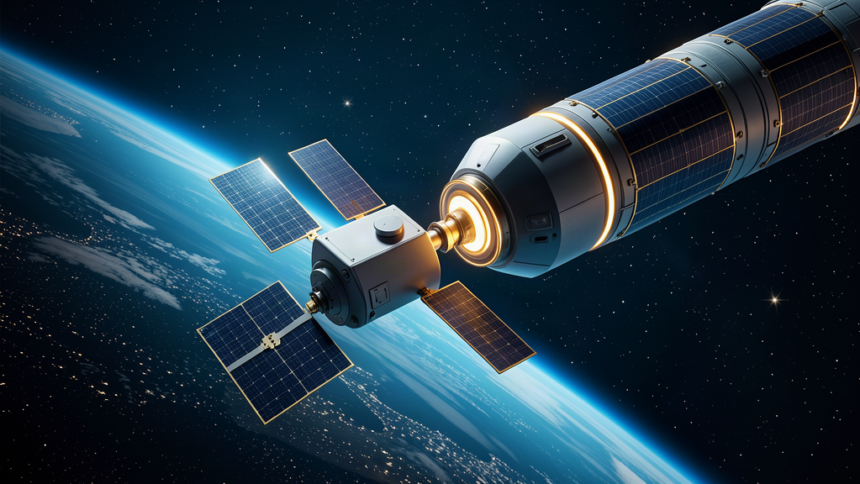
The Space Force is shopping for a commercial spacecraft that can sit on the ground, launch inside two weeks and then close in on a satellite that is already flying.
Space Systems Command’s Space Safari office issued a request for information on September 18. The office runs the service’s Tactically Responsive Space program, which buys hardware outside traditional programs of record for urgent combatant commander needs.
The notice describes a vehicle able to perform rendezvous and proximity operations, docking included, and sets a 14-day goal from tasking to launch. It also asks for modularity, so the service can swap a payload late without restarting the clock. A fielding date could come as early as fiscal 2029.
Docking is the hard part
Launching quickly is only half the problem. The spacecraft also has to find its target, match orbits, hold position and dock. The notice therefore treats a commercial docking interface as part of the requirement rather than a later upgrade.
The launch half is largely proven. Victus Nox set the benchmark in 2023, when a Firefly Alpha rocket carried a Millennium Space Systems payload to orbit within 27 hours of the order. Victus Diem, a repeatability exercise, followed in late 2025.
The most recent demo came in June. Victus Haze put a Rocket Lab satellite up on demand and matched it with a True Anomaly spacecraft already parked on orbit; the pair alternated as hunter and hunted, running pursuits and other dynamic engagements.
Why the clock matters
A satellite that takes months to reach orbit cannot help a commander whose adversary moved last week. Compressing the tasking-to-launch timeline turns space from a planning domain into a responsive one, and lets planners inspect a suspicious object without waiting for a budget cycle.