

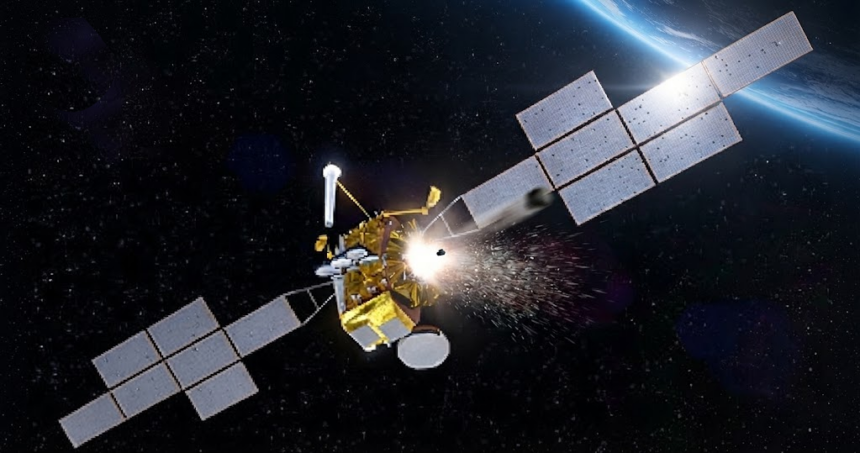
Spain is rebuilding its military communications constellation after losing a fresh satellite to what the operator called a space particle strike, and the replacement is being designed with jamming resistance in mind.
SpainSat NG 2, launched in October 2025, stopped working in January when a suspected particle hit a critical area during its transfer orbit. Insurer-covered costs will fund the successor, according to Indra Group, the majority owner of operator Hisdesat.
Hisdesat, the Spanish operator, confirmed July 31 that Airbus Defence and Space will lead the SpainSat NG 3 program, a geostationary spacecraft bound for the Americas, Europe, Africa and the Middle East. Airbus handles the bus and X-band payload, while Thales Alenia Space supplies the UHF and military Ka-band units. Delivery is slated for launch in late 2030 and entry into service in early 2031, working alongside SpainSat NG 1.
Airbus touted the new design’s “technological enhancements” over earlier models, citing greater operational agility, expanded bandwidth and stronger protection against jamming and electronic threats. The company stayed silent on whether NG 2’s failure drove any specific engineering changes.
The order arrives as Airbus, Thales and Leonardo push their Project Bromo space joint venture through regulatory review. Leonardo chief executive Lorenzo Mariani said the partners have submitted antitrust filings to European Union officials, with a verdict possibly landing in 2027. He described a combined space business employing more than 20,000 people.
The deal also reflects rising government demand for secure satellite services. Thales executives pointed to Europe’s IRIS² secure broadband constellation as a major growth opportunity, even as commercial GEO orders shrink under pressure from constellations like Starlink.