
Lawmakers can walk a carrier deck, stand on a tank range or watch fighters roar overhead. Nothing comparable exists for the orbital battlefields the Space Force is paid to defend. The Space Force Association hopes to change that with the National Spacepower Center, an industry-backed education and simulation project.
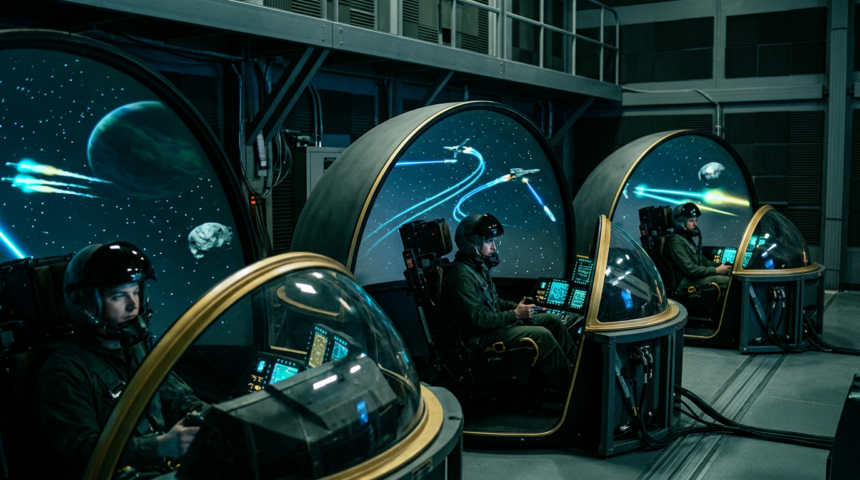
The center is assembling an unclassified digital environment that pulls together orbital tracking data, engineering models of spacecraft, command-and-control software and immersive displays. Its first integrated prototype went on show July 21 at the Arlington, Virginia, offices of Sedaro, the simulator software firm running the effort.
A slow-motion duel
Watching the first demonstration were Gen. Chance Saltzman, the Space Force’s chief of space operations, and Lt. Gen. Douglas Schiess, the general tipped to replace him. On the screen, a simulated adversary spacecraft closed in on a U.S. missile-warning satellite.
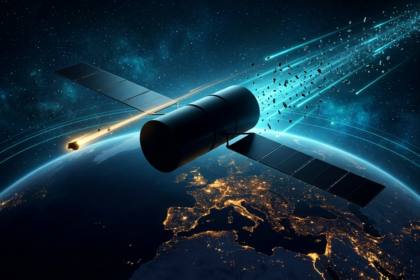
Spacecraft cannot bank and turn like fighter jets, so orbital combat is really a carefully timed performance of engine burns and patience. In the scripted encounter, an enemy satellite riding a highly elliptical orbit switched on a jammer, cutting the missile-warning feed that U.S. forces supporting an operation in the South China Sea were counting on. A follow-on scene had a friendly spacecraft move to intercept the attacker so the mission could pick back up.
Compressing time without lying
The tricky part is pacing. Satellites move at thousands of miles an hour, yet a decisive maneuver can take days to develop, so the simulation must speed up time without bending the physics. “All of this has to be executed at the perfect time,” said Dillon Cox, the Sedaro executive leading the center. “It needs to be in harmony.”