

Space Security News
  • Home
  • News

    Unnamed defense customers reserve payload room on Dream Chaser’s first flight

    September 5, 2026

    Chinese satellite in a rare retrograde orbit leaves 43 tracked fragments

    September 5, 2026

    France’s space summit loses its US heavyweights over White House warnings

    September 5, 2026

    The Space Force changes commanders as Schiess pledges deliberate growth

    September 5, 2026
  • Features

    Darknavy claims full control of the newest Starlink terminals

    September 3, 2026

    Allied radar net watching geostationary orbit gains Wales outpost

    September 3, 2026

    Royal Air Force promotes space to a top-tier command role

    September 3, 2026

    Pentagon pays space suppliers to scale output ahead of a fleet boom

    September 3, 2026
  • Spotlight
  • Events
  • About Us
    • Mission
    • Services
    • Contact Us
Reading: US surveillance sensor rides Japan’s final navigation satellite
Share
Search
  • Trending:
  • Alliances
  • Cislunar
  • Commercial
  • Communications
  • Cyber
  • Debris
  • Defense
  • Deterrence
  • Intelligence
  • Launch
  • Strategy
  • Surveillance
  • Missile
  • Navigation
  • War
Font ResizerAa
Space Security NewsSpace Security News
  • Home
  • News
  • Features
  • Spotlight
  • Events
  • About Us
Search
  • Home
  • News
  • Features
  • Spotlight
  • Events
  • About Us
    • Mission
    • Services
    • Contact Us
Follow US
© 2026 Space Security News. All Rights Reserved.
Satellite Security

US surveillance sensor rides Japan’s final navigation satellite

A US Space Force optical sensor launched aboard Japan's last navigation satellite to watch Chinese activity in geosynchronous orbit.

By
SSN Staff
Last updated: August 14, 2026
2 Min Read
Share

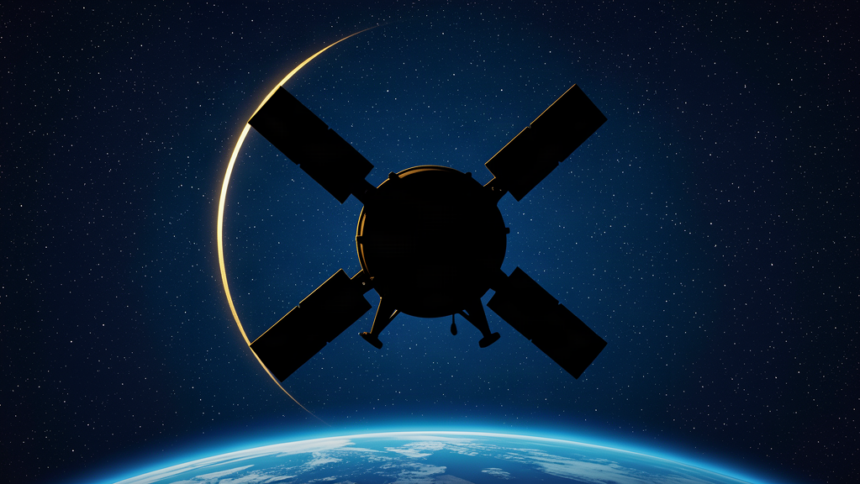
An American space surveillance sensor rode Japan’s final navigation satellite into orbit, giving the US a new watch post over Chinese activity in a contested stretch of geosynchronous space.

Japan’s H3 rocket launched the QZS-7 satellite, also called Michibiki No. 7, on Aug. 10 from Tanegashima Space Center. The satellite completed Japan’s seven-orbiter Quasi-Zenith Satellite System, a network that frees the country from reliance on GPS signals.

Tucked alongside the positioning hardware was a US Space Force optical sensor. The Space Systems Command confirmed the launch Aug. 14, calling it a US sovereign space domain awareness payload that flew with Japan’s cooperation.

The payload is built around SACHI cameras developed at MIT Lincoln Laboratory that are designed to watch Chinese satellite activity in geosynchronous orbit above the Indo-Pacific region. The sensor draws on a partnership where the US and Japan share space domain awareness data to track threats to their satellites.

Japan’s navigation constellation uses highly inclined geosynchronous orbits that keep orbiters overhead for hours, a geometry that also offers useful dwell time for an optical sensor watching a specific patch of the geosynchronous belt. The launch was the ninth flight of the H3 rocket, which lost a navigation satellite in December 2025 to a manufacturing defect.
TAGGED:H3 rocketJapanoptical sensorQZS-7QZSSspace domain awarenessSpace Force
SOURCES:Tech TimesSpace.comThe Register

Sign Up For Daily Newsletter

Be keep up! Get the latest breaking news delivered straight to your inbox.
By signing up, you agree to our Terms of Use and acknowledge the data practices in our Privacy Policy. You may unsubscribe at any time.
Share This Article
Facebook Email Copy Link Print

LATEST NEWS

Unnamed defense customers reserve payload room on Dream Chaser’s first flight

News
September 5, 2026

Chinese satellite in a rare retrograde orbit leaves 43 tracked fragments

US tracking counts 43 fragments after a Chinese satellite in a rare retrograde orbit breaks…

September 5, 2026

France’s space summit loses its US heavyweights over White House warnings

SpaceX and Blue Origin lead US withdrawals from Macron's summit after Washington advises firms to…

September 5, 2026

The Space Force changes commanders as Schiess pledges deliberate growth

Gen. Douglas Schiess succeeds Chance Saltzman as chief of space operations with growth and deterrence…

September 5, 2026

YOU MAY ALSO LIKE

Upgraded GEODSS telescopes triple Space Force deep space reach

Upgraded GEODSS telescopes give Space Force crews triple the sensitivity for spotting dim objects in deep orbit.

Ground Segment & Operations
August 18, 2026

International air and space leaders push allied unity after NATO summit

International air and space leaders called for strengthened allied cooperation following the NATO summit's recognition of space as a warfighting…

Emerging Threats & TechNewsSatellite Security
July 18, 2026

Senate fills space acquisition and NRO posts in one vote

A single Senate vote seated new leaders for Space Force acquisition and the National Reconnaissance Office.

Policy, Law & Governance
August 7, 2026

Astranis pivots from broadband into space surveillance work

Astranis expands beyond broadband with a geostationary spacecraft built to inspect and track other satellites.

Satellite Security
August 13, 2026

Breaking developments in space and cybersecurity, decoded for the modern defense and technology landscape.

Follow us: 

  • News
  • Features
  • Spotlight
  • Events
  • About Us
  • Mission
  • Services
  • Contact Us
Copyright © 2026 Space Security News. All Rights Reserved.
Privacy Policy | Legal
Welcome Back!

Sign in to your account

Username or Email Address
Password

Lost your password?