

Space Security News
  • Home
  • News

    Vast recruits Slingshot co-founder to lead defense satellite push

    July 27, 2026

    Commerce department launches voluntary certification for novel space missions

    July 27, 2026
    Sentinel satellite overlooking the Strait of Hormuz shipping lanes

    EU halts Copernicus imagery release near Iran war zone

    July 27, 2026
    Military GPS satellite with encrypted signal beams in orbit

    Air Force seizes control of troubled jam-proof GPS receiver project

    July 27, 2026
  • Features

    Classified Chinese satellite sweeps the geostationary belt for threats

    July 24, 2026

    Japan’s JAXA tests reusable rocket RV-X in milestone for space infrastructure

    July 24, 2026

    Software-defined radios open new attack surface for satellite networks

    July 22, 2026

    GPS jamming wave pushes UK toward self-reliant satellite security

    July 21, 2026
  • Spotlight
  • Events
  • About Us
    • Mission
    • Services
    • Contact Us
Reading: Cybersecurity in space is hard; in cislunar space, it’s really hard
Share
Search
  • Trending:
  • Alliances
  • Cislunar
  • Commercial
  • Communications
  • Cyber
  • Debris
  • Defense
  • Deterrence
  • Intelligence
  • Launch
  • Strategy
  • Surveillance
  • Missile
  • Navigation
  • War
Font ResizerAa
Space Security NewsSpace Security News
  • Home
  • News
  • Features
  • Spotlight
  • Events
  • About Us
Search
  • Home
  • News
  • Features
  • Spotlight
  • Events
  • About Us
    • Mission
    • Services
    • Contact Us
Follow US
© 2026 Space Security News. All Rights Reserved.
FeaturesSatellite Security

Cybersecurity in space is hard; in cislunar space, it’s really hard

By
SSN Staff
Last updated: May 12, 2026
4 Min Read
Share
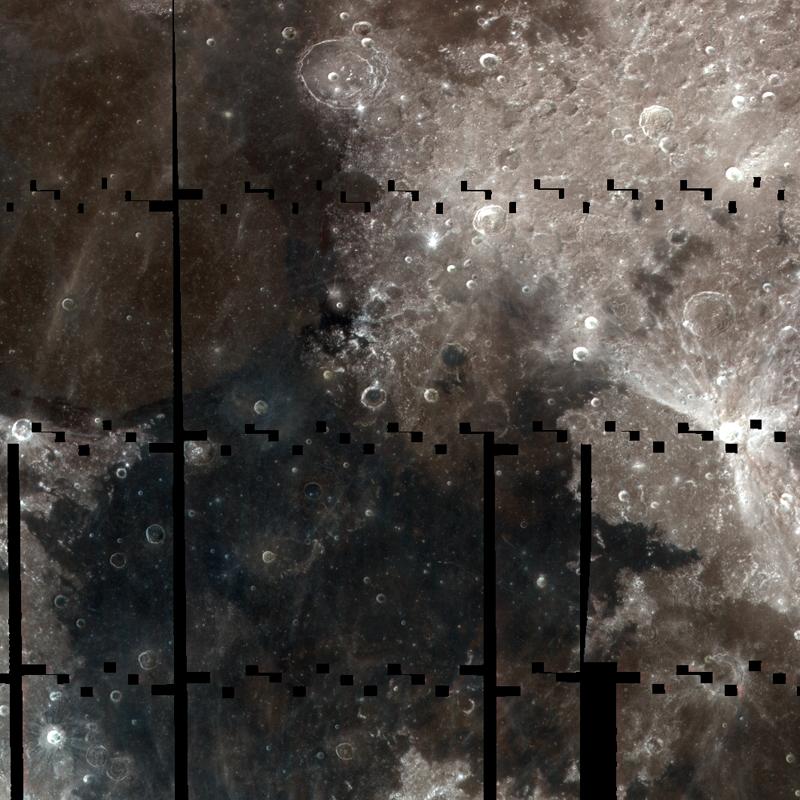
The Moon - NASA photo representing cislunar space cybersecurity challenges
Color of the Moon

The Moon is three seconds away. That’s the round-trip lag for a radio signal between Earth and lunar orbit. For a hacker, that delay is a nightmare. For a satellite defender, it’s an even bigger one.

Contents
  • Latency Is the New Threat Vector
  • Critical Infrastructure Gets a Lot More Critical
  • What This Means for the Future of Lunar Operations

Cybersecurity on Earth is hard enough. In space, it’s a beast. But in cislunar space—the vast region between our planet and the Moon—the playbook breaks entirely. The workarounds that keep Low-Earth Orbit constellations safe simply don’t scale to a quarter-million miles.

Latency Is the New Threat Vector

Radio waves take nearly three seconds to travel to the Moon and back. To Mars, it’s between six and 44 minutes. That’s not just an inconvenience—it rewrites the rules of cyber defense. You can’t sit at a console and steer a rover in real time. You send high-level software commands, and the onboard computer figures out the rest.

“We don’t send a radio signal which operates a hydraulics system,” explains Sam Visner, chair of the Space-ISAC. “We send high level software commands.” That makes cislunar space intensely IT-dependent. Sensors, telemetry, commands—everything flows through software. And software-defined systems are attack surfaces waiting to happen.

The good news? Latency can be a shield. Christopher Stott, CEO of Lonestar Data Holdings, points out that brute-force attacks and password spraying rely on fast, repeated logins. At lunar distances, TCP/IP connections time out. “High latency equals high security,” he says. NASA has already developed Delay/Disruption Tolerant Networking (DTN) to keep interplanetary networks alive through those gaps.

Critical Infrastructure Gets a Lot More Critical

On the Moon, there’s no backup grocery store. No backup atmosphere. Matthew Lamanna, a former Air Force cyber analyst, puts it bluntly: “Down here, if you lose power for a day, it’s survivable. On the Moon: How long can you go without air?”

Every system becomes life support. That’s not new for NASA—the agency has decades of experience building redundant, resilient hardware. But the attack surface is sprawling. More than 60 countries have signed the Artemis Accords. Private companies are piling in. Each partner brings its own security standards, its own vulnerabilities, its own insider threats.

Lamanna argues for universal cybersecurity rules baked in from day one. “You can’t do what we tend to do and try to bolt it on after the fact,” he says. “That is a recipe for failure.” A 2024 Government Accountability Office audit found NASA had issued cybersecurity guidance but hadn’t made it mandatory for programs or contracts. Some Artemis elements did include testing requirements, but the approach remains patchwork.

What This Means for the Future of Lunar Operations

Cislunar infrastructure will need to function for 10 to 15 years without hardware refresh cycles. That’s a decade-plus of software aging, unpatched vulnerabilities, and evolving threats—all at a distance where autonomy isn’t optional, it’s mandatory.

The race to the Moon is also a race to secure it. The three-second lag isn’t just a technical constraint. It’s a design constraint for an entire new class of cyber defense. And if we get it wrong, the consequences won’t be a data breach. They’ll be a life-or-death system failure, silently playing out a quarter-million miles away.

—

*Originally reported by [SatelliteToday Cyber](https://www.satellitetoday.com/cybersecurity/2026/04/07/cybersecurity-in-space-is-hard-in-cislunar-space-its-really-hard/). Adapted and republished with editorial context for SpaceSecurityNews.*
Sign Up For Daily Newsletter

Be keep up! Get the latest breaking news delivered straight to your inbox.
By signing up, you agree to our Terms of Use and acknowledge the data practices in our Privacy Policy. You may unsubscribe at any time.
Share This Article
Facebook Email Copy Link Print

LATEST NEWS

Vast recruits Slingshot co-founder to lead defense satellite push

News
July 27, 2026

Commerce department launches voluntary certification for novel space missions

The Office of Space Commerce rolls out a voluntary certification system for novel space activities…

July 27, 2026
Sentinel satellite overlooking the Strait of Hormuz shipping lanes

EU halts Copernicus imagery release near Iran war zone

The EU imposed a 24-hour restriction on Sentinel satellite imagery of the Gulf of Oman…

July 27, 2026
Military GPS satellite with encrypted signal beams in orbit

Air Force seizes control of troubled jam-proof GPS receiver project

The Air Force absorbed the Pentagon's M-code GPS receiver program from the Space Force after…

July 27, 2026

YOU MAY ALSO LIKE

Space Force awards SpaceX $4.16 billion to build satellite network for airborne target tracking

The U.S.

NewsSatellite Security
May 29, 2026

Gen. Guetlein challenges Golden Dome’s 1.2 trillion dollar price tag as Army battles the Spectrum Blackout

Space Force Gen.

Satellite SecuritySpotlight
May 19, 2026

MITRE releases emb3d™ – a cybersecurity threat model for embedded devices

Satellites are embedded systems wrapped in radiation-hardened armor. When MITRE releases a threat model for embedded devices, it matters directly…

FeaturesSatellite Security
May 12, 2026

Senators question Space Force legal readiness for future space warfare

Lawmakers pressed Space Force leaders on whether the service has adequate legal expertise to operate effectively in increasingly contested space…

NewsSatellite SecurityThreat Actors & Incidents
July 18, 2026

Breaking developments in space and cybersecurity, decoded for the modern defense and technology landscape.

Follow us: 

  • News
  • Features
  • Spotlight
  • Events
  • About Us
  • Mission
  • Services
  • Contact Us
Copyright © 2026 Space Security News. All Rights Reserved.
Privacy Policy | Legal
Welcome Back!

Sign in to your account

Username or Email Address
Password

Lost your password?