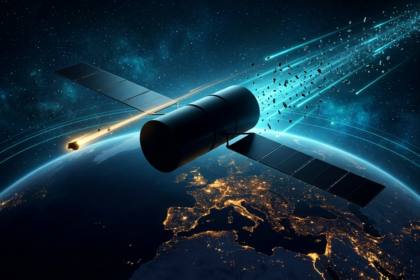


A think tank war game that handed China its own version of the Golden Dome ended with Washington and Beijing racing to field rival interceptor constellations and no agreement to slow either side. The Nonproliferation Policy Education Center ran the three-day exercise in June with current and former Pentagon space officials, congressional and military staff, and outside experts.
The scenario opens in 2036, when China announces a space-based missile shield it calls Smart Hawk. The American team chooses negotiation over out-deploying Beijing, but 36 months of talks without Russia go nowhere while China keeps building. Xi Jinping’s successor orders Smart Hawk launched in December 2039 with the fleet complete by April 2040. A February clash in the South China Sea that kills US Coast Guard personnel then pushes the president to secretly disrupt 20 Chinese satellites under the cover of solar weather. Launch failures knock out one heavy-lift pad on each side, and both governments keep fielding interceptors while weighing cyber options and track-two talks.
Players never settled on what the Golden Dome is for. Some argued it should only blunt missile strikes. Others wanted a smaller constellation that could hold Chinese and Russian satellites at risk or blockade China’s two coastal heavy-lift sites so Smart Hawk could never reach orbit. NPEC space policy adviser Pete Hays calculated that a blockade ring might need an order of magnitude fewer interceptors and could be delivered by a handful of Starship launches over days or weeks.
Henry Sokolski of NPEC, who wrote the SpaceNews account, argues the Pentagon cannot use the Dome effectively or bargain over it until it clarifies the system’s primary mission. He wants Congress to demand a report separating space superiority from second-strike defense and to hold back funding until that question is answered.