

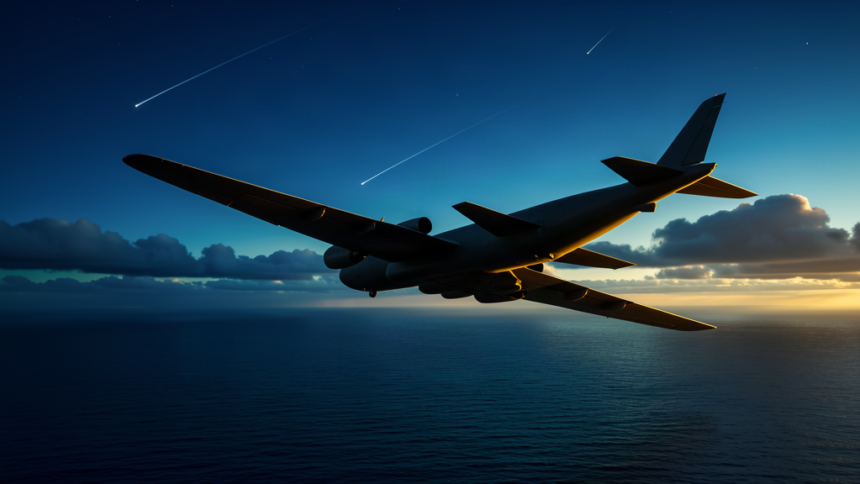
Russia’s missile testing reached across the South Pacific this week and forced a US military supply plane to abandon its run toward Antarctica.
A C-17 Globemaster using the call sign ICE28 left Christchurch, New Zealand at 9 a.m. local time on a routine cargo mission and touched back down at the same base about two and a half hours later, flight-tracking data shows. The turnaround followed a Notice to Airmen from New Zealand’s Civil Aviation Authority, which said the Russian Air Traffic Management Corporation had alerted it to a planned missile launch that could endanger aircraft inside the country’s Oceanic Flight Information Region, a zone of international waters spanning about 30 million square kilometers over the South Pacific, Southern Ocean and Tasman Sea.
The authority told Military Times that it marked out a danger area and posted the NOTAM as a standard alert, and that pilots keep the final say on whether to enter it.
A Pacific Air Forces spokesperson called the sortie routine support for WinFly, the annual window when US and New Zealand forces deliver advance teams and cargo to McMurdo Station and Scott Base ahead of the Antarctic research season, part of the long-running Operation Deep Freeze logistics chain.
The reversal is a fresh sign that Russian launch activity now shapes everyday military flight planning. Hazard notices tied to launches are becoming routine in international airspace, and operators must weigh schedules against the risk of crossing a live warning zone.