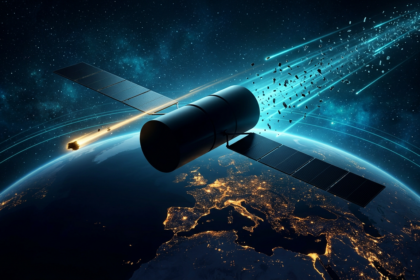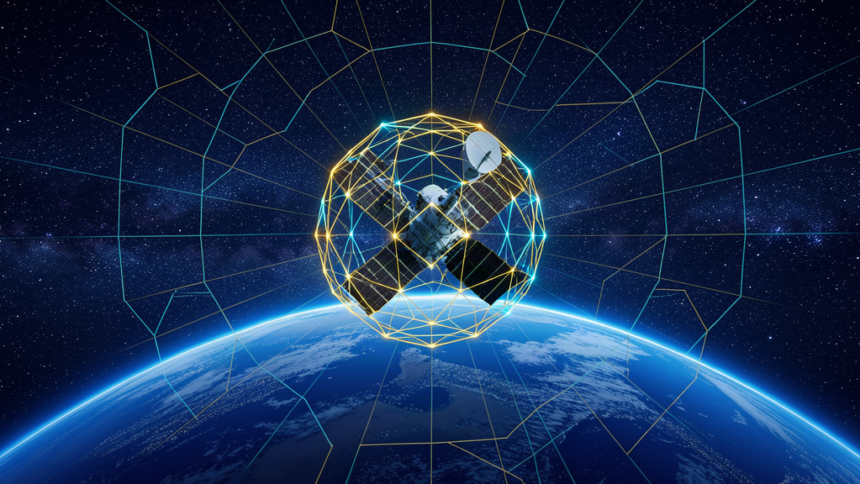
Satellite operators and the Pentagon are converging on post-quantum cryptography as the near-term answer to a threat that is already running: adversaries collecting encrypted traffic today so it can be unlocked later.
Public-key algorithms guarding satellite links and ground infrastructure rest on mathematics that a sufficiently powerful quantum computer would crack. Harvested traffic stays readable to whoever stores it, which matters most for spacecraft and links expected to stay in service for decades.
Post-quantum cryptography, or PQC, is the pragmatic fix. It leans on math believed hard for classical and quantum machines alike while running on ordinary processors, so it does not demand new quantum hardware the way quantum key distribution does.
Policy is already moving. The Department of Defense wants PQC across all its systems by the end of 2031, with plans published in April to fold it into new space systems and upgrade existing ones where possible. A June executive order directs civilian agencies to migrate high-value systems to PQC by the end of 2030, and authentication the following year. National security systems sit outside that order.
Engineers caution that swapping an algorithm is the easy part. PQC reaches into hardware roots of trust, secure elements and the way keys live in memory, and it has to keep the ground segment, satellite software, operators and outside systems interoperable throughout the transition. Pranav Gokhale, cofounder of quantum firm Infleqtion, said the technology is classical but still needs rigorous vetting. Filip Rezabek of Singapore’s SpaceComputer argued the migration is a systems-engineering problem rather than an algorithm upgrade.