The Space Force has handed a commercial company its sharpest orbital picture for the first time, and the recipient is SpaceX. Under the arrangement, Elon Musk’s rocket and satellite firm can read an “enhanced” tier of the High Accuracy Catalog that US Space Command maintains.
The catalog holds the military’s most precise position and uncertainty data on satellites, rocket bodies and debris.
What changed from September
In September, the Pentagon let SpaceX use Vector Covariance Messages drawn from the same catalog, on condition the material served internal purposes only and never became a product. The new access carries no such commercial firewall.
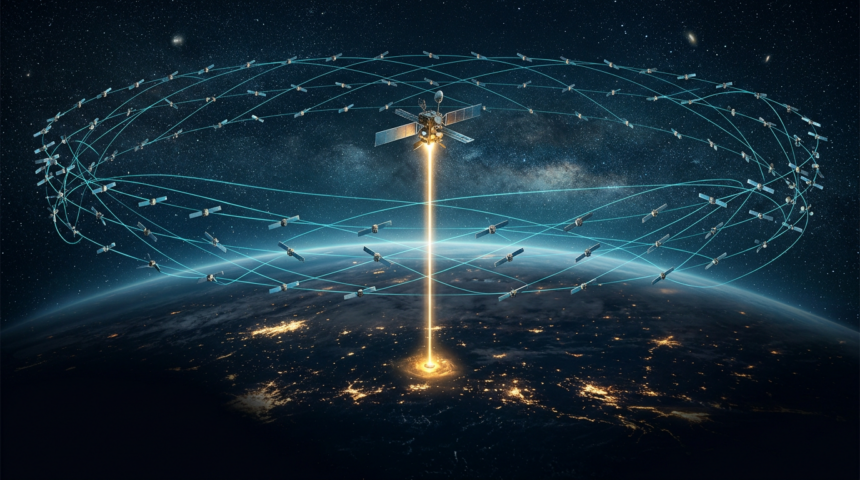
SpaceX runs roughly 11,000 Starlink satellites and could field 20,000, performing thousands of orbit adjustments a day. Radar-grade warning of an approaching object is worth real money to an operator moving that often.
A gap the government left open
The Traffic Coordination System for Space was meant to move routine collision screening off the Pentagon and into civilian hands. Nine years and close to $200M later, it still runs as a pilot with no go-live date, and the White House has twice proposed zeroing its budget.
Cole Donovan, a former program employee now with Stand Up for Science, called the arrangement a de facto monopoly. “It’s like giving a trucking company control of all the traffic lights,” he said.
A former NOAA official faulted Washington for never writing the rules. A Space Force spokesperson said the service trades data with several firms. Rivals offering similar screening complain that Stargaze, SpaceX’s camera network, already gives it an edge.
Why the security question is open
Whoever holds the best catalog decides which operators get the earliest notice of a close approach.