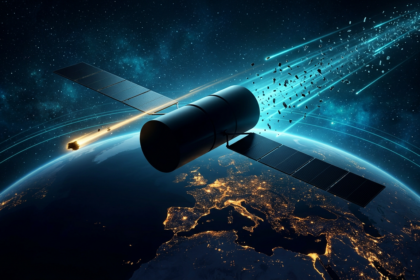
Space operators cannot see the attacks that matter most, and a fresh survey of last year’s activity points to a detection gap rather than good fortune.
Clémence Poirier, a cyberdefense researcher at the Center for Security Studies at ETH Zurich, cataloged 407 cyber operations aimed at the space sector during 2025. Those incidents reached at least 183 space-related organizations and drew on 139 separate threat actors. Hacktivist groups accounted for most of the actors identified, and distributed denial-of-service was the most frequent tactic, ahead of ransomware, data leaks and stolen credentials.
Nothing wrong in orbit, or nothing seen
All 407 landed on ground-based targets: corporate IT networks, ground stations and user modems. Not one hit a satellite in orbit. According to Poirier, that pattern exposes a blind spot rather than a spotless orbital record. Satellites were largely designed without any way to spot malicious activity, and they carry no onboard sensors. The absence leaves analysts short of cyber telemetry, so defenders cannot assemble satellite-specific indicators of compromise or study how adversaries operate.
Poirier put the consequence starkly, writing that “what cannot be detected cannot become intelligence, and what never becomes intelligence cannot improve detection.” She cautioned too that her tally is “not a census of everything that happened to the space sector in 2025, just simply what we could see via open-source information.”
Insecurity by transparency
Obscurity once shielded space security. That cover vanished as components grew cheaper, systems went digital and commercial off-the-shelf hardware spread, creating what Poirier terms insecurity by transparency. The consequences are plain: attacks disrupted satellite communications aboard oil tankers in Iran, disabled GNSS antennas used for seismic monitoring in Italy and interrupted weather services in South Africa.
Her remedy: wider intelligence sharing through analysis centers, lifecycle-wide threat assessment and onboard detection sensors on future spacecraft.