

Space Security News
  • Home
  • News

    Unnamed defense customers reserve payload room on Dream Chaser’s first flight

    September 5, 2026

    Chinese satellite in a rare retrograde orbit leaves 43 tracked fragments

    September 5, 2026

    France’s space summit loses its US heavyweights over White House warnings

    September 5, 2026

    The Space Force changes commanders as Schiess pledges deliberate growth

    September 5, 2026
  • Features

    Darknavy claims full control of the newest Starlink terminals

    September 3, 2026

    Allied radar net watching geostationary orbit gains Wales outpost

    September 3, 2026

    Royal Air Force promotes space to a top-tier command role

    September 3, 2026

    Pentagon pays space suppliers to scale output ahead of a fleet boom

    September 3, 2026
  • Spotlight
  • Events
  • About Us
    • Mission
    • Services
    • Contact Us
Reading: Boeing narrows Intelsat-29e failure to harness flaw or debris strike
Share
Search
  • Trending:
  • Alliances
  • Cislunar
  • Commercial
  • Communications
  • Cyber
  • Debris
  • Defense
  • Deterrence
  • Intelligence
  • Launch
  • Strategy
  • Surveillance
  • Missile
  • Navigation
  • War
Font ResizerAa
Space Security NewsSpace Security News
  • Home
  • News
  • Features
  • Spotlight
  • Events
  • About Us
Search
  • Home
  • News
  • Features
  • Spotlight
  • Events
  • About Us
    • Mission
    • Services
    • Contact Us
Follow US
© 2026 Space Security News. All Rights Reserved.
News

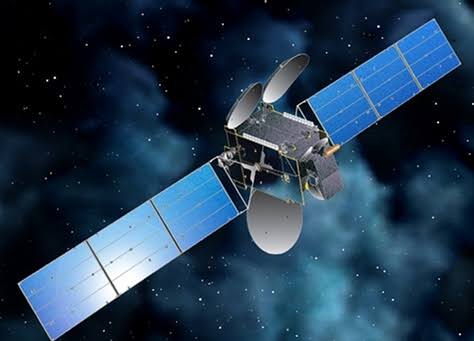
Boeing narrows Intelsat-29e failure to harness flaw or debris strike

Boeing and Intelsat have traced the Intelsat-29e satellite failure to a short circuit likely caused by a harness vulnerability or micrometeoroid impact.

By
SSN Staff
Last updated: August 1, 2026
2 Min Read
Share

Boeing narrows Intelsat-29e failure to harness flaw or debris strike

An investigation into the Intelsat-29e satellite failure has narrowed the root cause to a short circuit triggered by either a wiring harness vulnerability combined with electrostatic discharge or a micrometeoroid impact, Boeing and Intelsat reported July 30.

Boeing engineers and external specialists concluded that Intelsat’s six other Boeing 702 MP spacecraft carry minimal risk of experiencing the same failure mode. The satellite went silent in April after nine years in geostationary orbit, six years short of its targeted lifespan.

Boeing described the initiating event as an under-voltage event consistent with a short circuit hitting a critical power harness. The company is folding investigation lessons into other spacecraft as a precautionary measure, noting the specific combination of factors that led to the failure is improbable across the broader fleet.

The satellite launched in January 2016 on an Ariane 5 and served as Intelsat’s first high-throughput spacecraft over the Americas and North Atlantic. The operator disclosed $45 million to $50 million in forgone revenue from the loss. Its quarterly filing showed $509 million in revenue for the period ending June 30, a $28 million drop year over year, and the company is preparing a replacement satellite procurement.

The findings underscore a challenge unique to space operations: ground testing cannot fully reproduce the orbital environment’s combinations of debris flux, plasma charging and thermal stress. For fleet operators, absorbing the financial and operational hit from a single spacecraft loss makes the case for distributed architectures and faster replacement pathways more urgent than ever.


TAGGED:Boeingfleet resilienceIntelsatmicrometeoroidorbital debrissatellite failureSpace Situational Awareness
SOURCES:SpaceNews

Sign Up For Daily Newsletter

Be keep up! Get the latest breaking news delivered straight to your inbox.
By signing up, you agree to our Terms of Use and acknowledge the data practices in our Privacy Policy. You may unsubscribe at any time.
Share This Article
Facebook Email Copy Link Print

LATEST NEWS

Unnamed defense customers reserve payload room on Dream Chaser’s first flight

News
September 5, 2026

Chinese satellite in a rare retrograde orbit leaves 43 tracked fragments

US tracking counts 43 fragments after a Chinese satellite in a rare retrograde orbit breaks…

September 5, 2026

France’s space summit loses its US heavyweights over White House warnings

SpaceX and Blue Origin lead US withdrawals from Macron's summit after Washington advises firms to…

September 5, 2026

The Space Force changes commanders as Schiess pledges deliberate growth

Gen. Douglas Schiess succeeds Chance Saltzman as chief of space operations with growth and deterrence…

September 5, 2026

YOU MAY ALSO LIKE

Johns Hopkins APL to steer Space Force’s space-based interceptor program

The Space Force has selected Johns Hopkins University's Applied Physics Laboratory as technical direction agent for its space-based interceptor program.

News
August 2, 2026

SpiderOak wins new UAS systems contract

The U.S. Army is about to field a swarm of new drones, and it wants to make sure they aren’t…

NewsResources
May 13, 2026

Space Force prototype deal pushes DRS sensors toward space control

Leonardo DRS lands a Space Force prototype contract to build cheaper sensors that track fast-moving threats.

News
September 1, 2026

Air Force seizes control of troubled jam-proof GPS receiver project

The Air Force absorbed the Pentagon's M-code GPS receiver program from the Space Force after years of technical delays.

News
July 27, 2026

Breaking developments in space and cybersecurity, decoded for the modern defense and technology landscape.

Follow us: 

  • News
  • Features
  • Spotlight
  • Events
  • About Us
  • Mission
  • Services
  • Contact Us
Copyright © 2026 Space Security News. All Rights Reserved.
Privacy Policy | Legal
Welcome Back!

Sign in to your account

Username or Email Address
Password

Lost your password?