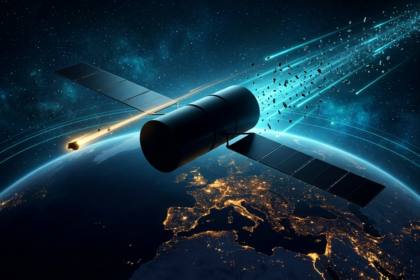


Katalyst Space’s Link spacecraft got within 12 to 15 kilometers of NASA’s Swift observatory before the company and the space agency called an end to the servicing attempt.
The company said September 4 that Link raised its orbit and closed on the telescope during rendezvous tests, firing all three of its main electric thrusters at once and exercising the robotic arms built to grapple Swift. No images of the observatory were released, and NASA said Link will not make another close approach during the rest of its mission. The craft is expected to operate for two to three more weeks and then deorbit.
Link launched in early July on a $30M NASA contract to grab Swift, which lacks propulsion of its own, and use electric thrusters to lift the aging telescope before its orbit decayed out of control. The mission went sideways quickly: two of three reaction wheels failed, and engineers spent so much propellant stabilizing the craft that the reboost was abandoned on August 20.
Chief executive Ghonhee Lee told reporters in late August that rendezvous remained possible even if the rescue was not, and the September flyby delivered some of the data he wanted. Katalyst called the pass a success for gathering rendezvous and proximity operations measurements and for checking how its systems behave in orbit.
For NASA, the outcome is a loss of the reboost but a recovery of sorts for the 22-year-old telescope mission, which will now rely on natural decay timing rather than a servicing assist. For the servicing industry, the flight still counts as a rare on-orbit demonstration of close approach, thruster, and robotic-arm operations, techniques militaries are also studying for inspection and docking missions.