

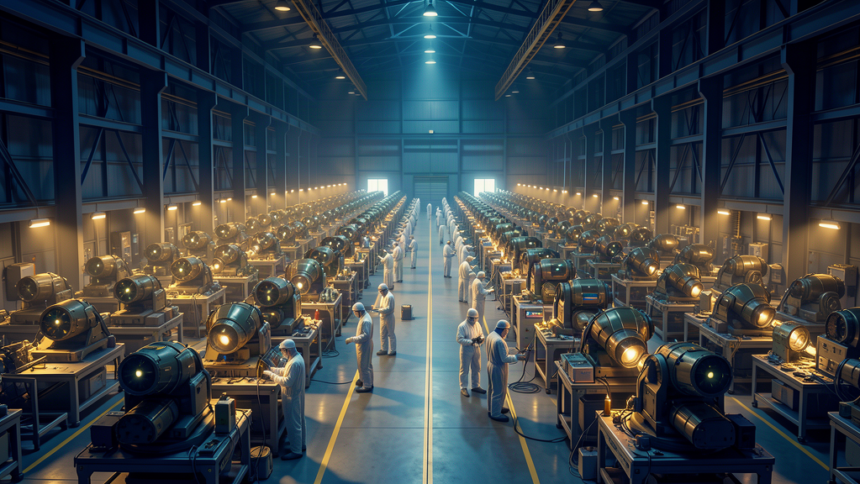
Fleet growth plans are pushing the Pentagon to invest in satellite factories, not just satellite orders. The Defense Innovation Unit is funding suppliers able to manufacture at high rates through its Adaptive Space Manufacturing and Integration Scale project, signing other transaction agreements with an early wave of companies.
The first agreement went to ALL.SPACE, the York Space Systems unit behind the Hydra terminal for links across multiple networks and orbits. The company aims to prove it can turn out hundreds of Hydra units a month, climbing toward thousands a year, under a production model its chief operating officer, Rod McCurdy, said matches the delivery tempo future space and defense architectures demand. Freeform Future Corp took the other agreement in July, scaling up propulsion and structural hardware with Skyfall, a laser-based additive manufacturing platform the firm unveiled earlier this year.
A Defense Production Act infusion announced September 1 sits alongside those deals: $11.4M for Stellant Systems, a specialist in the vacuum tubes that boost radio frequency signals, to certify a space-rated amplifier and expand output. Pentagon officials tied the spending to lower schedule, cost, and performance risk on government satellite programs.
The contracts respond to an expected surge in demand. Space Force deputy chief General David N. Miller Jr. has projected a five-year budget spanning thousands of satellites for missile warning, tracking, and data transport. Systems Command chief Lieutenant General Philip Garrant has told industry to be ready to build four times its current output. A Space Force-sponsored RAND study released this week adds a warning: shortages of engineers and skilled manufacturing workers could stall the rebuilding of military space capabilities after wartime losses, and the service should treat workforce capacity as a readiness issue.