

The Pentagon has handed SpaceX a look at its most closely held picture of what is in orbit, and the company is paying for it with data from its own satellites.
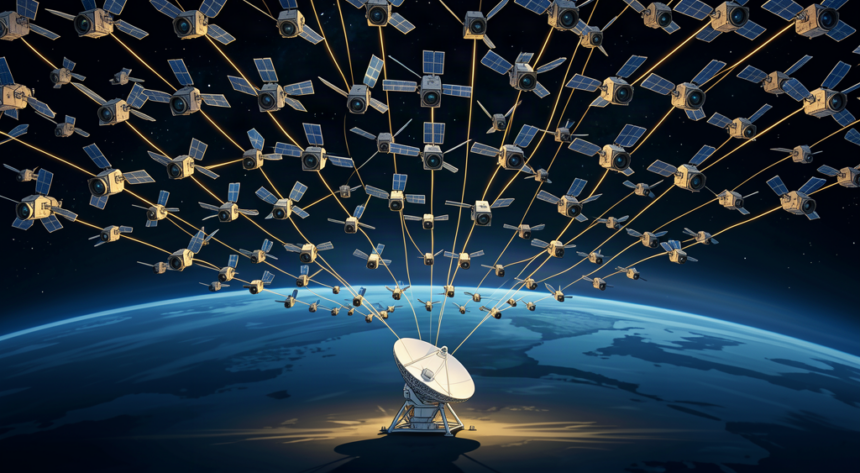
Under the arrangement, SpaceX can use Vector Covariance Messages drawn from the High Accuracy Catalog, a government dataset describing the position and uncertainty of orbital objects with far more precision than public catalogues allow. The military, in return, gets tracking information gathered by Stargaze, a system SpaceX built on roughly 30,000 cameras riding aboard its Starlink satellites.
What each side gets
Scale is the reason the trade matters. SpaceX runs the largest constellation in orbit, and its fleet performs about 20,000 orbit adjustments a day. Roughly 1,000 of those maneuvers are dodges. Radar-grade warning of an approaching object is worth something real to an operator moving that often.
Jon Herman, SpaceX’s senior director for Starlink, said the company’s own spacecraft have trouble picking out small debris, so government radar supplies something Stargaze cannot deliver alone.
Limits on commercial use
Nothing here is being bought or sold. The terms confine SpaceX to internal purposes and forbid it from turning the catalogue into a product.
Even so, the deal gives the largest constellation operator a view of the orbital environment that rivals cannot match, and it deepens Pentagon reliance on commercial sensors for work long performed by government radars. Competitors have complained that it hands Stargaze an edge in the space traffic screening market.



