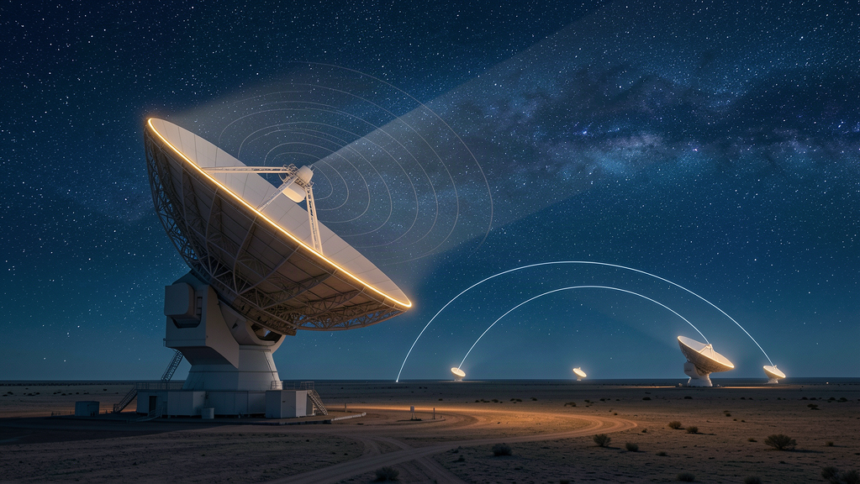
Lake Kickapoo, Texas has been named the preferred home for the third and final antenna site of the Deep Space Advanced Radar Capability, the tracking network the United States is building with Australia and the United Kingdom to watch the geostationary belt.
The Space Force said the network’s radars are meant to follow objects out to roughly 35,000 kilometers, where military communications and missile-warning satellites operate. Australia’s station at Exmouth is already in early use. A second site is planned for Cawdor Barracks in Pembrokeshire, Wales.
Construction in Texas is expected to begin in 2027 once a contract is awarded and planning approvals clear, including a Federal Aviation Administration certification that the radar will not interfere with civil air traffic control. Civil work is scheduled to finish in 2029, followed by testing and operational acceptance in 2030.
Northrop Grumman is the expected contractor. The company built the Australian site and holds the Welsh one, where a Space Systems Command modification worth $215.9M last month lifted the cumulative contract value to $495.4M.
Spreading three radars across widely separated longitudes lets the partners hand off coverage as Earth turns, cutting blind spots over the equator. Unlike optical telescopes, radars can work at night and through cloud. The arrangement sits inside a 22-year agreement among the three governments, with the Space Force leading. Gen. Douglas Schiess, the chief of space operations, said the Texas pick keeps the partners on track for a global deep-space sensing network and sharper visibility in a contested domain.