

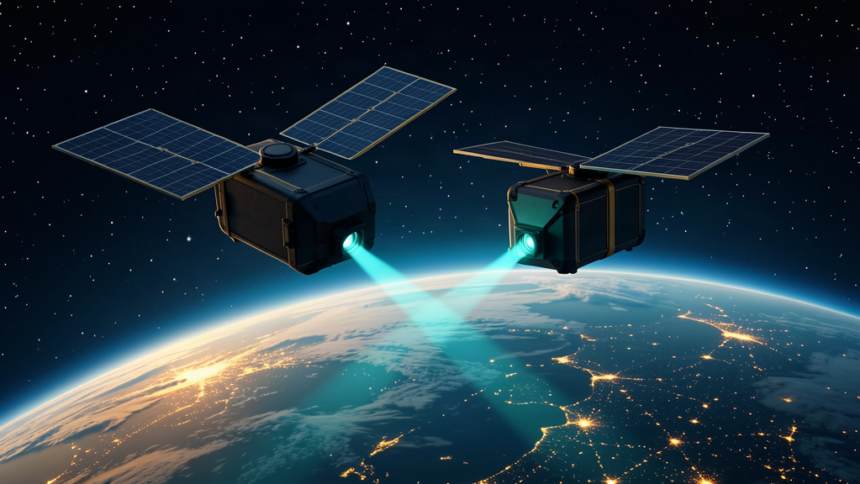
Geostationary orbit is where militaries park their most expensive satellites, and where a handful of them do all the watching. The Pentagon now wants a cheaper way to see what is happening up there.
The Defense Innovation Unit and Space Systems Command picked Northrop Grumman and True Anomaly on Sept. 18 to build prototype spacecraft for the Geosynchronous High-Resolution Optical Space-Based Tactical Reconnaissance program, known as GHOST-R.
Northrop will use its ESPASat-L bus, a spacecraft the size of a small suitcase, carrying a commercial optical payload from TRL 11 of Irvine, California. True Anomaly brings its Jackal vehicle and Mosaic ground system. Both must deliver an operational prototype within 24 months.
The spacecraft are meant to launch in 2028 and then demonstrate high-resolution imagery and weekly observations of target satellites in geosynchronous orbit. Success would move them into the Space Force’s RG-XX reconnaissance program of record by 2029.
Col. Bryon McClain, acting portfolio acquisition executive for space combat power, said the approach “burns down technical risk” and drives down lifecycle costs. Northrop built the GSSAP satellites that GHOST-R is meant to augment.
The award also answers pressure from Space Command, which wants more maneuverable spacecraft and better tracking. Gen. Stephen Whiting told the AMOS conference on Sept. 16 that to negate threats in orbit, forces must find, fix, track and target them.
GHOST-R sits inside DIU’s Kill Web portfolio and feeds a wider push to field a proliferated reconnaissance layer before the decade ends.



