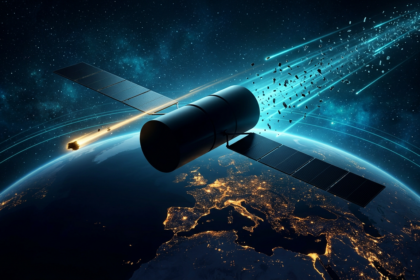
Space Systems Command has put its starkest assessment of orbital conflict into writing, describing adversarial weapons able to jam, blind or destroy the satellites the joint force runs on.
The command’s intelligence directorate published the analysis on October 13 and splits the threat in two. China is the long-term problem. Russia is the urgent one.
“China is our pacing threat, but Russia is our acute threat,” said Capt. Amy R. Padilla, who runs the Intelligence Plans and Programs branch. Either winning the upper hand in orbit, she warned, would sharply narrow what US forces can do from space.
A 667 percent expansion
Beijing’s on-orbit footprint grew 667 percent in a decade, passing 1,300 satellites. In 2025 it flew 70 launches carrying 319 payloads, and it operates at least 10 spacecraft dedicated to watching objects in orbit.
Russia cuts a different figure. Its launch cadence fell from an average above 26 a year between 1995 and 2015 to 17 in 2024. Capt. Jonathan Cordova said Moscow wants to reclaim a standing it once held.
Four ways to take out a satellite
The command groups the danger into four buckets. Electromagnetic warfare covers jamming of ground links and spoofing of signals, plus lasers and high-power microwaves. Cyber operations target the computers that fly spacecraft and the ground systems that command them. Orbital threats include kinetic strikes. A high-altitude nuclear burst would round out the list.
Padilla was blunt: counterspace weapons are not a future problem, and that line has already been crossed.
A GPS outage would cost $1B a day, or $45B across 30 days during planting season, per Office of Space Commerce figures the command cites. The United States fields its own space control weapons and spreads capability across constellations so one loss does not cascade.