

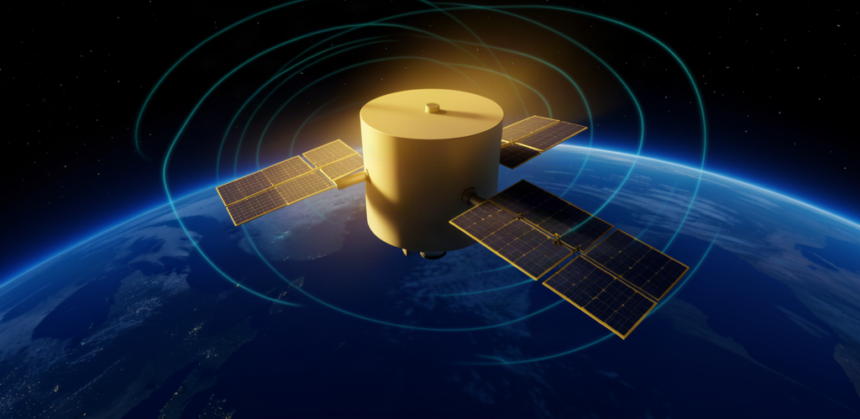
Some satellites the Space Force flies are older than the guardians operating them. Deloitte wants to know whether their software can survive an attack anyway.
The contractor has spent the past year building what its space cyber lead, Ryan Roberts, calls an on-orbit cyber range: a small constellation that researchers deliberately attack, then watch, to learn whether onboard defenses recognize the intrusion.
Why distance is no protection
Retired Air Force Lt. Gen. Chris Weggeman, now a Deloitte managing director, said the cyber attack surface reaches across ground systems, radio-frequency links, satellites, user equipment, launch systems and the supply chain. Roberts put it plainly: the distance between an operator and a spacecraft is not a cyber resiliency insulator.
The program, Project Constellation, flew an intrusion-detection capability called Silent Shield aboard a Deloitte spacecraft. Engineers run simulated attacks against their own hardware to test whether software-only defenses can spot anomalies without consuming the limited computing power, memory and bandwidth a satellite needs for its mission.
Telling attacks from faults
The harder problem is interpretation. A glitch can come from failing hardware, unexpected software behavior, firmware or the space environment itself, so Deloitte is using AI and machine learning to separate hostile activity from ordinary faults.
Weggeman and Roberts spoke to Military.com at the Air, Space and Cyber Conference in National Harbor, Maryland, where Air Force Secretary Troy Meink acknowledged that the Space Force has on-orbit space control weapons.



