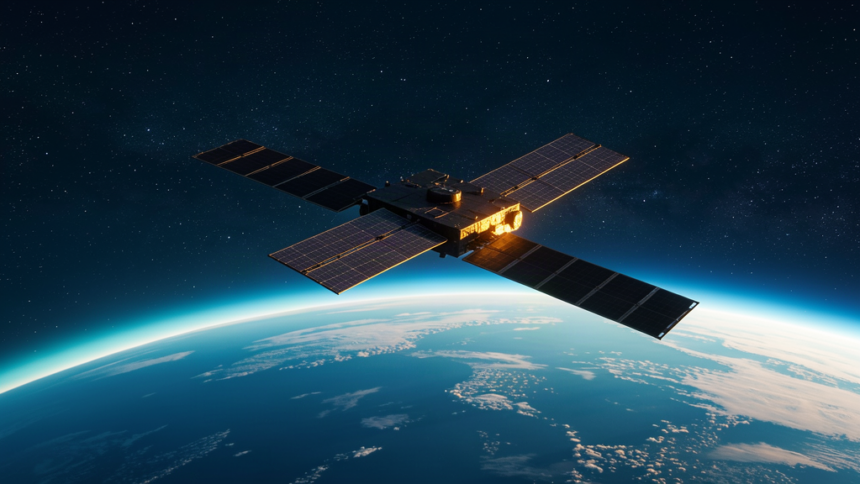
SpaceX wants the Federal Communications Commission to let its heaviest satellites retire in graveyard orbits rather than burn up.
The company filed a 12-page technical response with the FCC on Sept. 18 covering re-entry thermodynamics and collision probabilities for Starmind, its plan to run AI computing loads on spacecraft in low Earth orbit. The filing answers agency questions about disposal safety and the human casualty risk of retiring platforms that weigh about 4,000 kilograms, roughly seven times a 575-kilogram Starlink V2 Mini.
Under the approach SpaceX described, the first units would fly lower and de-orbit under control into ocean disposal zones. For spacecraft operating at higher altitudes, the company asked regulators to approve moving them into graveyard orbits once they stop working instead of dragging them down.
The filing also addresses how much of each spacecraft would survive the heat of re-entry, the measure regulators use to estimate what reaches the surface. SpaceX said the deployment would be phased so it can study real atmospheric and environmental effects during early operations.
Debris math already flagged the constellation
The disposal question carries extra weight because a debris model published in August placed Starmind above the runaway threshold for fragment growth, alongside Blue Origin’s Project Sunrise and China’s Guowang. Graveyard orbits take dead hardware out of the busiest altitudes, but they leave intact mass in orbit indefinitely rather than removing it.