Elon Musk says the reason Starlink should stay a civilian network is that turning it into a weapon would invite Russia to destroy it. The argument arrived the same day his company learned how exposed that fleet already is.
In a post on X on October 25, Musk said using Starlink to carry out offensive strikes would make its satellites legitimate targets for anti-satellite attack. He was responding to a discussion of Russia’s November 2021 Nudol shot that shattered a defunct Soviet-era satellite in low Earth orbit.
The debris argument
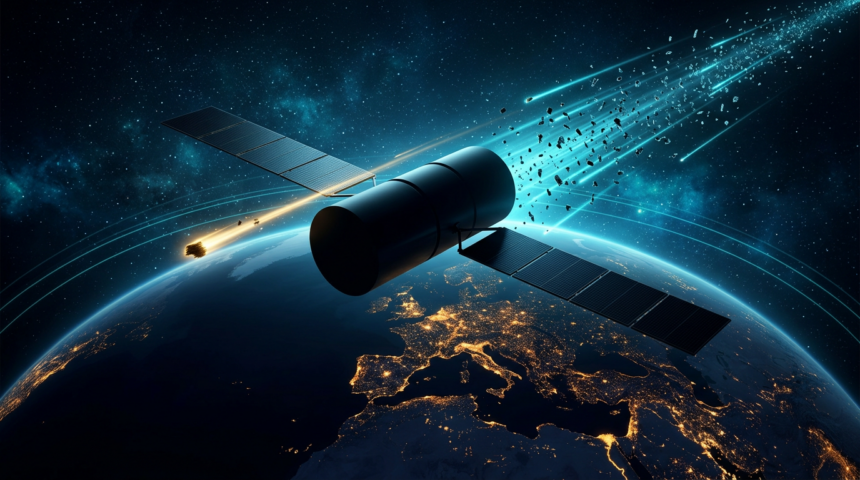
Musk’s reasoning rests on orbital mechanics rather than politics. A destroyed spacecraft does not disappear. It becomes thousands of fragments moving at several kilometers per second, each able to cripple anything in a similar altitude band. Further collisions could compound the damage in the way analysts have warned about for decades.
A line Ukraine disputes
Musk’s post also revived an allegation that Ukrainian forces breached Starlink’s terms of service, coming as full-speed service was restored after a week of restrictions. He has previously said the network was not meant to guide offensive drones.
Serhii Beskrestnov, an adviser to Ukraine’s president, rejected the claim on technical grounds. Commercial terminals carry speed caps and there is no Starlink coverage over Russian territory, which he said makes long range strike use impractical.
Why the warning cuts both ways
The statement is a stakeholder defining his own liability, not a policy change. It lands during a week when Kyiv signed a letter of intent with Nokia and ICEYE to explore sovereign military communications.
Russia has spent years building jammers tuned to Starlink and has demonstrated a direct-ascent interceptor. Whether Moscow would accept the debris cost of a kinetic attack remains the open question. Musk’s implicit answer is that it might.