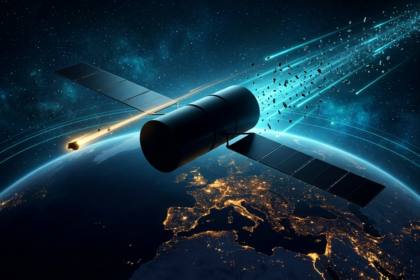

Satellites are, at their core, embedded systems wrapped in radiation-hardened armor and hurled into orbit. The microcontrollers, FPGAs, and RTUs running everything from attitude control to payload processing share the same fundamental constraints as industrial embedded devices—limited compute, long lifecycles, physical exposure—only amplified by the fact that nobody can walk up to a satellite and plug in a diagnostic cable. So when MITRE drops a new threat model specifically for embedded devices, it matters directly for space security.
Meet EMB3D: a publicly available knowledge base that maps cyber threats to embedded hardware and prescribes mitigations ranked by implementation difficulty. It is the result of a collaboration between MITRE, Red Balloon Security, and Narf Industries, and piloted across aerospace, automotive, energy, and manufacturing before release. For the space community, it fills a gap that existing frameworks have largely ignored.
Space Systems Are Embedded Systems
A modern communications satellite runs dozens of embedded microcontrollers handling telemetry, thermal regulation, power distribution, and payload switching. Ground stations are packed with RTUs and signal processing gear that have been in service for decades. The James Webb Space Telescope operates a flight computer built around a RAD750—a radiation-hardened PowerPC chip that first hit the market in 2001. These systems cannot be patched monthly, cannot be rebooted on a whim, and often cannot be physically inspected after launch.
EMB3D directly addresses this reality. Each threat in the database is mapped to specific hardware or software properties—the exact kind of architectural details that matter when you are designing a satellite bus or certifying a ground station component. Rather than generic cybersecurity advice, the model offers technical mitigations tied to the ISA/IEC 62443-4-2 standard, which is already the benchmark for industrial control system security in ground segment operations.
What EMB3D Brings to Satellite Security
Three capabilities matter most for space operators. First, the threat catalog covers physical and side-channel attacks—not just software bugs. For satellites, that means protection against fault injection, timing attacks, and electromagnetic interference that could corrupt onboard processing. Second, the mitigation tiers are ranked by implementation difficulty, helping integrators prioritize hardening of spacecraft components based on real-world risk rather than theoretical paranoia. Third, EMB3D is explicitly designed as a living framework accepting community submissions, which means as researchers discover new vulnerabilities in onboard radios, GNSS receivers, or star trackers, those findings can flow directly into the shared knowledge base.
The aerospace pilot program that helped shape EMB3D signals that vendors building satellite components and launch vehicles have already begun aligning with the model. For procurement officers in space agencies and defense departments, EMB3D offers a standardized checklist to evaluate whether a given component ships with credible embedded security controls—or bolts.
A Framework That Evolves With the Threat
Space systems operate on timelines that commercial IT cannot fathom. A geostationary satellite designed today will launch in three years and operate for fifteen more. The threat landscape it faces in 2040 will look nothing like today. EMB3D cannot predict the future, but its community-driven update model means the framework can stay current in ways that static procurement specs never will. For asset owners managing constellations or ground station networks, that adaptability is the difference between a compliance checkbox and actual defensive capability.
The bottom line: space security has an embedded device problem, and EMB3D is the most concrete framework yet that actually addresses it. The full model is available at emb3d.mitre.org.
—
Originally reported by SpaceSecurity.info. Adapted and republished with contextual edits for focusing on space security relevance.