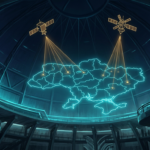
Airbus Defence and Space and Thales Alenia Space learned on November 5 that they had won the order, the DGA said. Airbus leads, supplying both buses, a substantial share of the first spacecraft’s imaging package, and the ground architecture. Thales Alenia Space develops the second payload and supplies critical elements of the first.
Seeing in the dark and watching orbit
France ordered two optical reconnaissance satellites for more than 1.5 billion euros to replace a three-satellite constellation that took seven years to assemble, and the new pair will be able to photograph other spacecraft as well as the ground.
Each spacecraft can image very high resolution targets in visible and infrared wavelengths, day and night.
The ability to image objects in space gives French Space Command a way to inspect what is near its own assets, a role previously served by allied data. The supplier roster published by the procurement agency reaches well past the two primes, naming detector and optics houses Lynred, Pyxalis and Safran Reosc, star tracker maker Sodern and Air Liquide’s advanced technologies arm. Thales calls the optical train a hyper-stable telescope with active optics, feeding ultra-sensitive high-speed detectors.
A capability only a few allies hold
Few NATO members run sovereign high-end optical spy satellites, and other European partners depend on lower-resolution systems or on US-supplied imagery. In January, President Emmanuel Macron said his country was furnishing two thirds of the intelligence going to Ukraine, making continuity of the industrial line a policy question and not only a procurement one.
By 2033 the first will be working, the DGA said, and both should orbit by 2035. The contract runs to the end of the 2030s and covers design, manufacture, testing, ground systems and in-orbit maintenance.