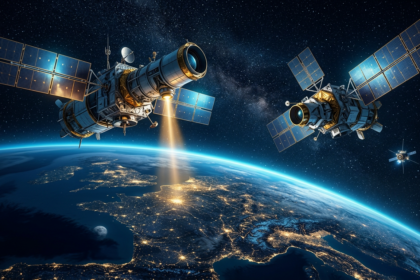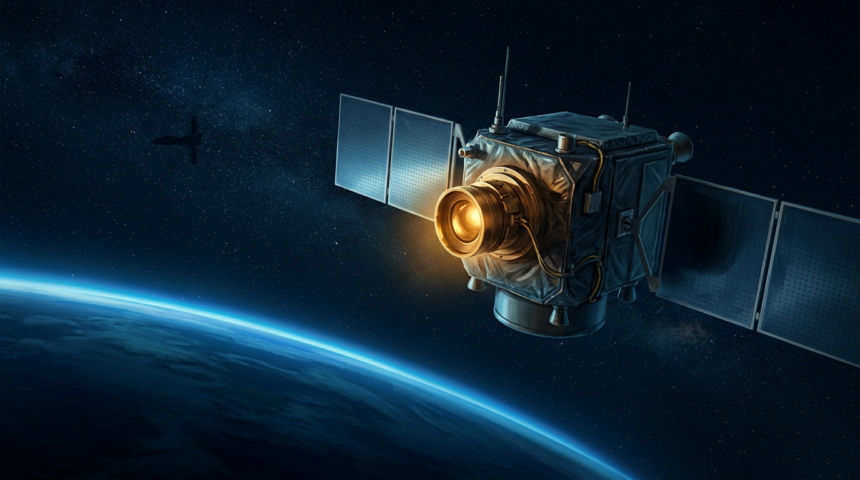
Anduril has a satellite in orbit and three payloads that survived the trip, roughly two years after saying it would build spacecraft. The Long-Wave Infrared Space Sensor is the one that matters for defense: it can pick up the heat of another satellite even while that object sits in Earth’s shadow.
Anduril-216 launched in July on a Falcon 9 and is operating in low Earth orbit. The mission, called Lectronimo internally, was company-funded from the start.
The gap that shadow creates
Optical tracking depends on sunlight bouncing off a target. Once a spacecraft crosses into eclipse, sensors that need reflected light go blind, and whatever it does there goes unwatched. A long-wave infrared detector reads emitted heat instead, which is why the capability shows up repeatedly in proposals for watching maneuverable satellites.
The other two payloads point at a different problem. A Mission Compute Module processes, fuses and stores data on the spacecraft rather than downlinking raw imagery, and a Dynamic Payload Power Module regulates bus output for payloads with different demands. Each was built to a common interface so it can move between buses.
From five people to a spacecraft
The team began with five engineers and a three-month deadline. That early prototype, Project Jan, did one thing: it captured an image, processed it onboard, and returned the result. Apex supplied the bus through its Aries platform.
Anduril’s path into orbit started on the ground. The company had already been modernizing Space Surveillance Network assets for the Space Force, wiring legacy ground systems into its Lattice software. Adam Thurn, now running orbital systems, joined from Terran Orbital and argued for an on-orbit processor almost immediately.
The company frames the business as deterrence, citing frequent close approaches by Russian spacecraft and China’s expanding launch cadence.