Two dozen satellites, one window a day
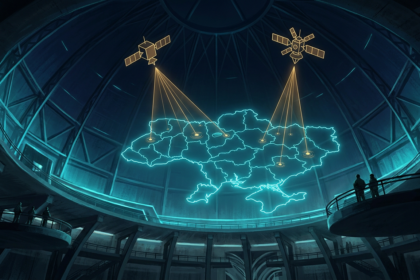
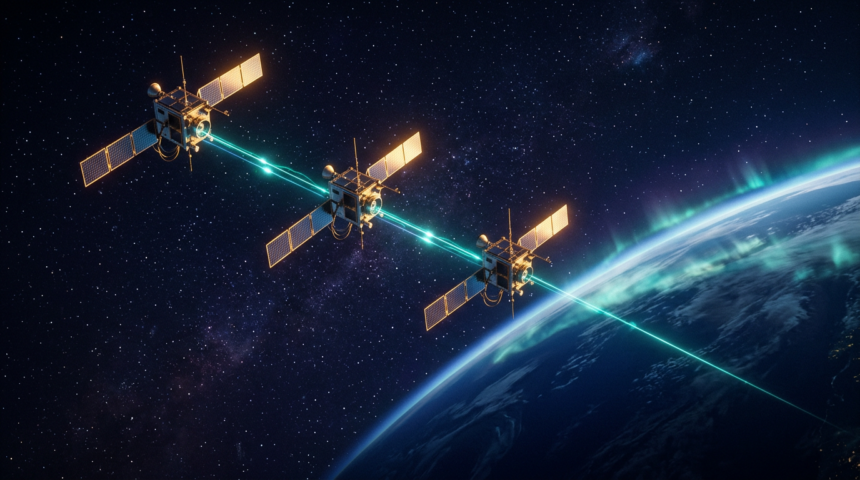
Russia’s newest communications constellation is small, intermittent and already doing war work. Ukraine’s Main Directorate of Intelligence, known as GUR, reported on November 6 that 32 Rassvet spacecraft are being used for military traffic over Ukrainian territory.
The satellites arrived in two batches this year, one in March and one in July. Moscow acknowledged passing the thirty-satellite mark in October, according to the GUR statement.
Why a partial network still matters
Coverage is patchy. The agency said links exist only when a satellite passes overhead, so service comes and goes rather than running continuously.
The capability that worries Kyiv is two-way. Reconnaissance drones would pass imagery back in real time, and operators could redirect attack drones mid-flight instead of committing to a course plotted before launch. That allows a strike to chase a relocated target or skirt a defence, and makes interception by electronic warfare harder.
Starshield, the Pentagon’s variant of SpaceX’s Starlink, is the network Ukraine depends on for its own drone work. Rassvet gives Moscow an equivalent it controls outright.
Sanctions and a longer runway
President Volodymyr Zelensky sanctioned ten companies tied to the programme last week, among them Bureau 1440, the state project’s coordinator. The bureau has said it intends to orbit more than 900 satellites by 2035, and GUR expects further launches before the end of 2026.
Ukraine has also gone after the supply side, striking the Progress Rocket and Space Center in the Samara region in August. Progress builds the rockets that carry Rassvet upward. Denys Sienik, Ukraine’s envoy in Washington, has asked the US Treasury to sanction the network’s suppliers, and has said the Russian system relies on Chinese components.