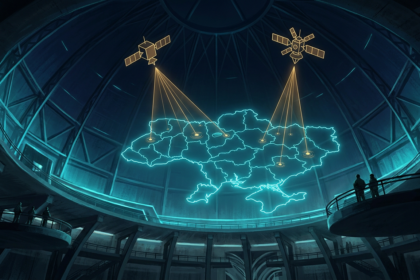
Satellite operators are running their networks on trust they cannot audit. At CyberSat in Reston, Virginia, security chiefs from three space companies said the October throttle on Ukraine's Starshield service exposed an uncomfortable truth: whoever holds the switch holds the mission.
Victor Einfeldt, director of IT security at Iridium, did not soften his view. Taking service away mid-war without telling the customer first, he said, cannot become the standard. His test for sovereignty was blunt, asking who owns the kill switch.
Resilience means more than one supplier
Vantor CISO Norm Laudermilch framed the event as a change to a critical operational service rather than an outage, a different category of risk for a customer relying on it mid-mission. His conclusion is redundancy at the architectural level: instead of one provider, buy three, and build end systems that fail over automatically when one degrades.
Sovereignty does not require owning a constellation
Not every nation needs its own satellites, the panel agreed, but the terms have to be explicit. Vinit Duggal, CISO at SES and a vice president of network engineering, pointed to Europe's IRIS2 program as a managed-service model where the customer keeps control of the kill switch and the payloads. Under that structure, Europe's side holds the shutoff authority and the hosted instruments, with first services targeted for 2030.
The panel also warned that agentic AI is compressing response windows. Laudermilch said Vantor logged four to five hundred thousand attack attempts per day within 48 hours of a critical PHP vulnerability US cyber agencies published on October 21. SES reported no material business impact.
On orbital data centers, Duggal was direct: the industry is not ready to secure them. Onboard intrusion detection, Laudermilch added, is still in its infancy.