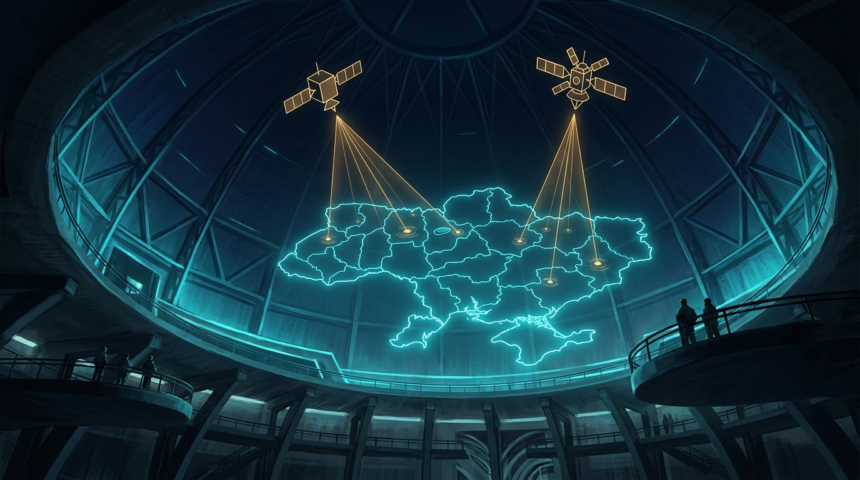
Ukrainian lawmakers cleared a first hurdle on November 9 for draft law No. 13255, which would make space a fighting branch of the armed forces in its own right. The Verkhovna Rada recorded 252 votes in favour; a second reading now awaits.
In practical terms the bill gives a dedicated branch a legal home inside the armed forces structure. Standing it up operationally would still take separate organisational and technical work.
What Kyiv wants in orbit
Three capabilities sit at the centre of the proposal, each sketched in parliament’s explanatory note. Catching incoming missile launches tops the list, paired with ways to counter such strikes; interceptors need that lead time. Encrypted military satcom and reconnaissance round it out.
Supporting materials argue the country already holds the scientific and engineering base to build its own satellites. Fedir Venislavskyi, who sits on the national security and defence committee, put his name to the text, registered on May 2, 2025.
A rented capability becomes a national one
The push follows a year of institutional groundwork. A Space Policy Directorate stood up at the defence ministry in March 2025 to coordinate requirements and partner access, and the bill converts that policy body into something closer to a service branch. The budget committee warns the spending lacks funding, with no constellation or timetable attached.
Reliance on foreign operators supplies the motive. Starshield restrictions in October reportedly stalled Ukrainian military operations, sharpening a debate over who can switch a military off. Elon Musk then amplified a post branding Kyiv’s Starlink access a mistake, after Volodymyr Zelensky complained too much power sat with one wealthy man.
Practical work is already moving, with Himera and Denmark’s GomSpace lofting a test satellite in October and reporting it live by the 27th.